Meditation for Anxiety After a Breakup: Practices for When Your Mind Won't Settle
Introduction
You've heard meditation helps anxiety, you've tried to sit still, and within a minute your mind sprinted straight back to the breakup with more intensity than before you closed your eyes. That's not you failing at meditation. It's using the wrong kind for the state you're in.When breakup anxiety is high, the body is activated first, and a still, open-attention practice just hands that activation a quiet room to fill.
Quick Answer: Post-breakup anxiety is a body-first state — elevated stress chemistry, a racing system, a mind scanning for threat — so meditation works only when it settles the body before it asks anything of the mind. The practices that help are active and physical, not still and open:
1. Extended-exhale breathing — directly calms the nervous system
2. Body-based anchoring — gives attention a physical place to rest
3. Brief and frequent, not long and perfect — short resets beat long sessions
This isn't about clearing your mind. It's about down-regulating the body enough that the mind stops sprinting.

Why Sitting Still Makes Breakup Anxiety Worse
Open, do-nothing meditation assumes a relatively calm baseline you can observe from. Post-breakup, that baseline is gone. The body is running elevated stress chemistry, and the mind is in threat-scanning mode, so when you remove all external focus, you don't find stillness — you hand the anxious loop an empty stage.
This is why "just watch your thoughts" often backfires here. With nothing to do, attention snaps to the loudest signal, which is the breakup, and the watching turns into ruminating. You end the session more wound up and conclude you're bad at meditation, when really you applied a calm-state practice to an activated state.
The fix is sequence: settle the body first, then let the mind follow. A down-regulated nervous system makes calm attention possible; trying to force calm attention onto an activated body does not. The cognitive side of interrupting the loop — labeling thoughts, surfing urges — is its own toolkit in Mindfulness After a Breakup; this page is the body-first half.
Key Insights: - Open meditation assumes a calm baseline you don't have right after a breakup - Removing external focus hands the anxious loop an empty stage - "Watch your thoughts" turns into rumination when the body is activated - The fix is sequence: down-regulate the body first, then the mind follows
Put It Into Practice: - Stop judging yourself for "failing" at still meditation while activated - Treat the body, not the mind, as the first thing to settle - Use the active, physical practices below before any open-attention sitting
Key Points
- Open meditation assumes a calm baseline you lack post-breakup
- No external focus hands the anxious loop an empty stage
- Watching thoughts becomes rumination when the body is activated
- The fix is sequence: settle the body, then the mind
Practical Insights
- Stop judging yourself for struggling with still meditation
- Settle the body before the mind
- Use active physical practices before open sitting
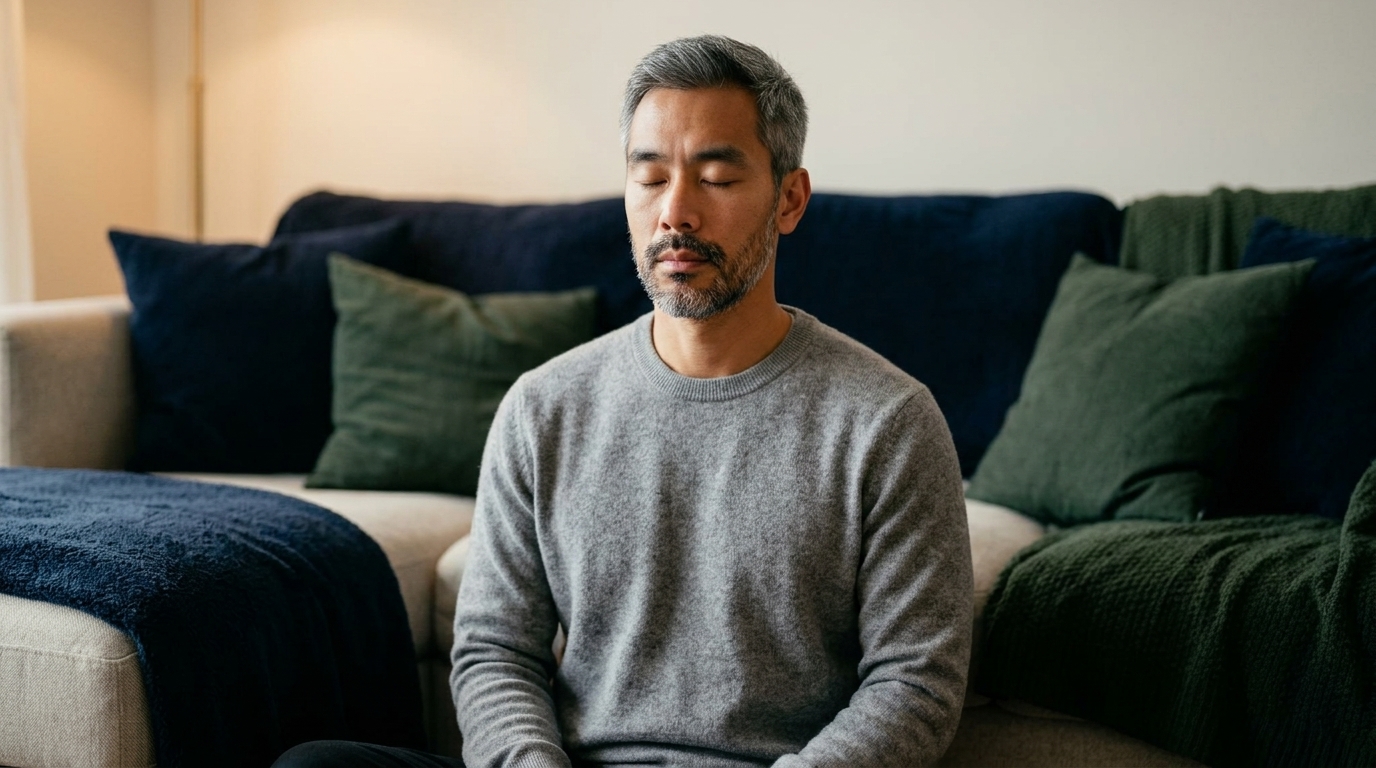
Breathing and Body Practices That Actually Settle You
Three practices reliably lower the physical activation, and none requires an empty mind.
Extended-exhale breathing is the most direct. Breathe in for a count of four and out for a count of seven or eight, so the exhale is clearly longer than the inhale. The long exhale activates the parasympathetic (rest) system and slows the heart rate measurably. A few minutes of this does more for acute anxiety than twenty minutes of trying to sit with it.
Body-based anchoring gives your attention a physical home. Instead of watching thoughts, put attention on sensation: the weight of your feet on the floor, the contact of your back against the chair, the temperature of the air. When the mind drifts to the breakup, return it to the sensation, not to a blank. You're not emptying the mind — you're occupying it with the present body.
Gentle movement discharges activation that sitting traps. A slow walk, a stretch, shaking out the hands and shoulders — physical movement helps metabolize the stress chemistry rather than bottling it. The deeper body-led release work is in Somatic Emotional Release. (Skip intensity-shock tricks; steady, gentle regulation is what helps here, not jolting the system.)
Key Insights: - Extended-exhale breathing (in 4, out 7-8) directly activates the rest system - Body anchoring occupies attention with sensation rather than emptying the mind - Gentle movement metabolizes stress chemistry that sitting traps - None of these require a quiet mind to work
Put It Into Practice: - Do a few rounds of in-4, out-7 breathing when anxiety spikes - Anchor to a physical sensation and return to it, not to a blank, when you drift - Add slow movement — a walk or a stretch — to discharge activation
Key Points
- Extended-exhale breathing activates the rest system directly
- Body anchoring occupies attention with sensation, not emptiness
- Gentle movement metabolizes trapped stress chemistry
- None of these require a quiet mind
Practical Insights
- Use in-4, out-7 breathing at anxiety spikes
- Anchor to a sensation and return to it when you drift
- Add a slow walk or stretch to discharge activation
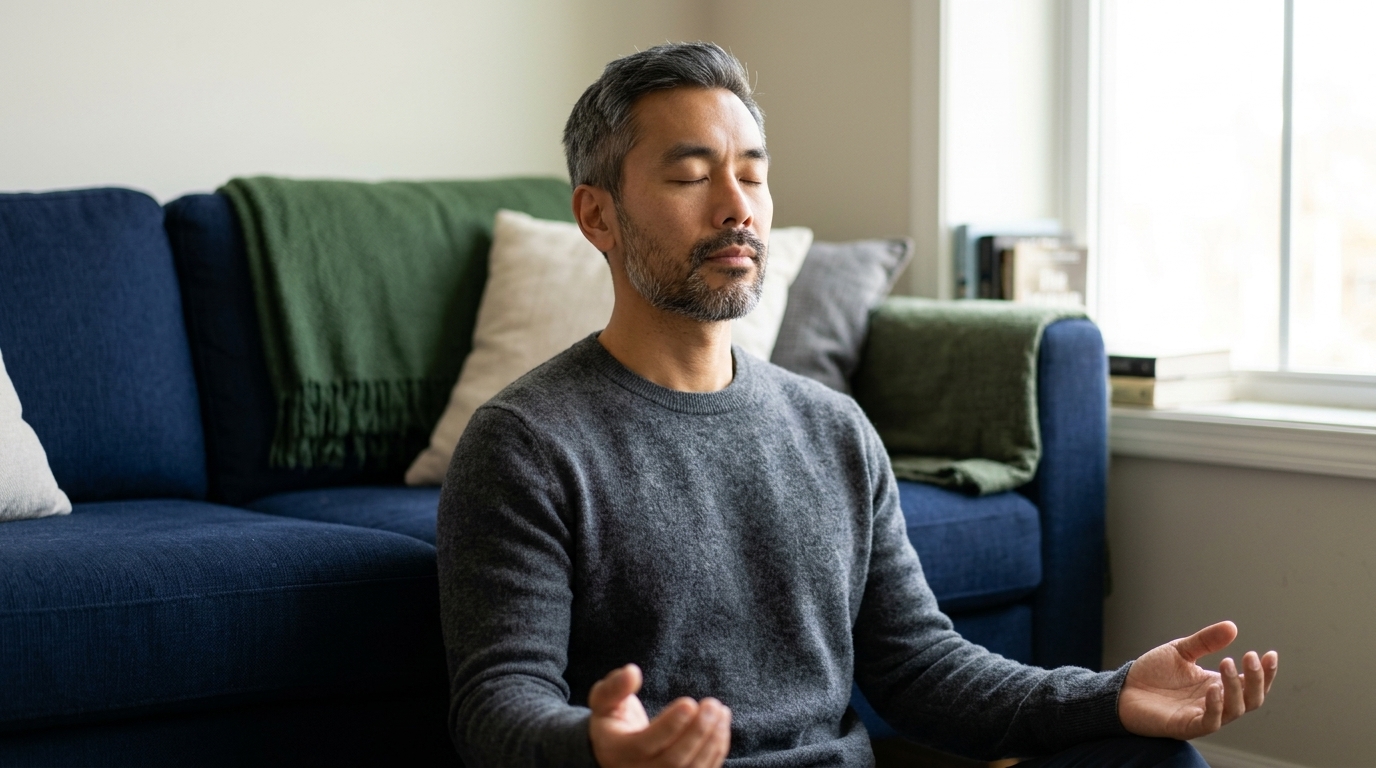
Brief and Frequent Beats Long and Perfect
The other reason standard meditation advice fails post-breakup is the dosing. A twenty-minute daily sit is a big ask for a depleted system, and missing it becomes one more failure. Smaller and more often works better.
Use two-minute resets. A handful of extended-exhale breaths or a brief body-anchor, done several times a day at the moments anxiety rises, regulates your baseline more reliably than one long session you dread and skip. The goal is frequency, not duration.
Attach them to existing moments. Tie a reset to things you already do — before you check your phone in the morning, at a red light, before a meal. Anchoring the practice to an existing habit removes the willpower of "finding time" and makes it nearly automatic.
Drop the standard of a clear mind entirely. A reset counts if you did the breaths, full stop — even if your mind wandered to the breakup the whole time. Judging the practice by calm achieved turns it into another test you're failing; judging it by practice done keeps it sustainable. Track which resets actually help in Untangle Your Thoughts, and if a sustained practice becomes accessible later in recovery, you can build toward it then.
Key Insights: - A 20-minute daily sit is too big an ask for a depleted post-breakup system - Two-minute resets done frequently regulate the baseline better than one long session - Attaching resets to existing habits removes the willpower of finding time - A reset counts if you did the breaths, regardless of whether the mind settled
Put It Into Practice: - Replace one long session with several two-minute resets through the day - Attach each reset to something you already do daily - Count a reset as done if you did it, not by how calm you felt
Key Points
- A long daily sit is too big an ask for a depleted system
- Frequent two-minute resets beat one long session
- Habit-anchoring removes the willpower of finding time
- A reset counts when done, regardless of calm achieved
Practical Insights
- Swap one long session for several short resets
- Attach resets to existing daily habits
- Judge resets by done, not by calm
Frequently Asked Questions
Why does meditation make my breakup anxiety worse?
Because open, do-nothing meditation assumes a calm baseline you don't have right after a breakup. With elevated stress chemistry and a threat-scanning mind, removing all external focus hands the anxious loop an empty stage, so "watching your thoughts" turns into ruminating about the breakup. The fix is to settle the body first with active, physical practices before any still sitting.
What kind of meditation helps with anxiety after a breakup?
Body-first practices: extended-exhale breathing (in for four, out for seven or eight) to activate the rest system, body-based anchoring (resting attention on physical sensation rather than emptying the mind), and gentle movement to metabolize stress chemistry. These work because they down-regulate the body, which is what makes calm attention possible — they don't require a quiet mind.
How long should I meditate when I'm anxious?
Short and often beats long and perfect. A handful of extended-exhale breaths or a brief body-anchor, done several times a day when anxiety rises, regulates your baseline more reliably than one twenty-minute session you dread and skip. Aim for frequency, not duration, and attach each reset to something you already do daily.
I can't clear my mind — am I doing it wrong?
No. Clearing the mind isn't the goal, especially post-breakup. A reset counts if you did the breaths, even if your thoughts went to the breakup the whole time. Body anchoring in particular isn't about emptiness — it's about occupying attention with present sensation. Judging the practice by calm achieved turns it into another test you're failing; judge it by practice done.
What's the fastest way to calm down during an anxiety spike?
Extended-exhale breathing is the most direct: breathe in for a count of four and out for a count of seven or eight so the exhale is clearly longer, for a few rounds. The long exhale activates the parasympathetic nervous system and slows your heart rate. Pair it with anchoring attention to a physical sensation, like your feet on the floor, to keep the mind from sprinting back to the breakup.
Conclusion
Meditation backfires after a breakup when you apply a calm-state practice to an activated body. The sequence that works is body first: extended-exhale breathing, body-based anchoring, and gentle movement to settle the physical activation, done in brief, frequent resets rather than one long perfect session — and counted as success whenever you do them, not when your mind goes quiet.Pair this body-first half with the cognitive tools in Mindfulness After a Breakup, go deeper on body-led release in Somatic Emotional Release, and track what settles you in Untangle Your Thoughts.