Reclaiming Your Space After a Breakup: The Space Reclamation Protocol That Resets Your Nervous System Room by Room
Introduction
You rearranged the throw pillows. You lit a new candle. You even bought a plant. And the second you sat down on the couch, you felt it again — that heavy, sinking awareness that this room still belongs to a relationship that no longer exists.Redecorating after a breakup isn't about aesthetics. It's about neuroscience. Your brain has mapped every surface, scent, and sightline in your home to your ex. The kitchen counter where they leaned while you cooked. The side of the bed they slept on. The specific quality of light at 7 PM that meant they'd be home soon. These aren't just memories — they're environmental triggers encoded into your nervous system.Quick Answer: Your living space feels wrong after a breakup because your brain built context-dependent associations between your environment and your ex. Changing a throw pillow doesn't interrupt those associations. A systematic, room-by-room reset does.I call this The Space Reclamation Protocol — a structured approach to resetting your living environment so your nervous system stops interpreting your own home as a crime scene.After working with hundreds of women navigating breakup recovery, I've noticed a consistent pattern: the ones who intentionally restructure their physical space recover faster than those who try to "sit with the discomfort" in an environment that's actively re-traumatizing them. That's not weakness. That's basic neuroscience — your environment either supports your recovery or sabotages it.This isn't about buying new furniture you can't afford or pretending a Pinterest board will fix your heartbreak. It's about understanding why your space affects your healing and making targeted changes that actually interrupt the grief loop.Let me walk you through the mechanism and the protocol.

The Ghost Room Effect: Why Your Home Triggers Grief
Your home isn't neutral territory after a breakup. It's a minefield of context-dependent memories — and your brain is stepping on every one of them.
Here's the mechanism: when you form a relationship, your brain doesn't just store memories of your partner. It stores the entire sensory environment associated with them. The smell of the laundry detergent you both used. The sound of the refrigerator humming at 2 AM when you couldn't sleep and they were beside you. The exact spot on the bathroom counter where their toothbrush sat.
Neuroscientists call this context-dependent memory — your brain encodes information alongside the environment where the experience occurred. When you re-enter that environment, the memories activate automatically. You don't choose to think about your ex when you walk into the kitchen. Your brain does it for you because the kitchen is tagged with hundreds of micro-associations.
I call this The Ghost Room Effect: the phenomenon where every room in your home contains an invisible imprint of your former relationship, and your nervous system responds to that imprint as if the loss is still happening.
This is why you can feel fine at work, fine at a friend's house, and completely fall apart the moment you unlock your front door. It's not that you're failing at recovery. It's that your home environment is constantly cueing your brain to re-experience the loss.
The Ghost Room Effect explains three specific patterns I see repeatedly:
Pattern 1: The Threshold Crash You feel stable all day, then walk through your front door and the grief hits immediately. Your entryway is the most heavily encoded trigger zone because it's where the transition between "shared life" and "outside world" happened hundreds of times.
Pattern 2: The Time-of-Day Trigger Your grief intensifies at specific times — usually evenings and weekends. These are the hours your brain associated with togetherness. The lighting, the ambient sounds, even the temperature of your home at 7 PM is encoded with "partner should be here."
Pattern 3: The Phantom Routine You catch yourself setting two places at the table, glancing at the door when you hear a sound, or reaching for their side of the bed. These aren't conscious choices — they're motor patterns your brain automated during the relationship and hasn't yet overwritten.
The Ghost Room Effect is strongest in the first 30 days, but it can persist for months if your environment stays unchanged. Your nervous system needs new data to overwrite the old associations. Without physical changes to your space, you're asking your brain to heal inside the wound.
This is why "just give it time" isn't sufficient advice. Time helps, but time in an unchanged environment means your brain keeps refreshing the old associations every single day.
Key Insights: - Context-dependent memory means your brain encoded your ex into your home's sensory landscape - The Ghost Room Effect: invisible relationship imprints in every room trigger grief responses automatically - Three common patterns: Threshold Crash (grief at the door), Time-of-Day Trigger (evenings/weekends), Phantom Routine (automated partner-related habits) - Unchanged environments keep refreshing old associations, slowing recovery
Put It Into Practice: - Walk through your home and note which rooms or moments trigger the strongest grief response — these are your highest-priority zones - Track your Time-of-Day Triggers for one week using Untangle Your Thoughts — pattern recognition is the first step to interrupting the loop - Recognize that the Threshold Crash is neurological, not emotional weakness — your entryway needs to be the first thing you change
Key Points
- Context-dependent memory encodes your ex into your home's sensory environment automatically
- The Ghost Room Effect: invisible relationship imprints trigger grief in every room
- Threshold Crash: grief hits hardest at your front door because it's the most heavily encoded transition zone
- Time-of-Day Triggers: evenings and weekends carry the strongest partner-absence associations
- Unchanged environments refresh old associations daily, actively slowing recovery
Practical Insights
- Identify your three highest-trigger zones by walking through your home and rating grief intensity 1-10 in each room
- Track Time-of-Day Triggers for one week in Untangle Your Thoughts to find your most vulnerable windows
- Your entryway is almost always the highest-priority change — start there before touching any other room

The Space Reclamation Protocol: A Room-by-Room Reset
The Space Reclamation Protocol is a systematic approach to resetting your living environment so your nervous system can build new associations. It's not about spending money. It's about disrupting the sensory patterns your brain linked to your ex.
The protocol works in three zones, prioritized by trigger intensity and ease of change:
Zone 1: The Bathroom (Start Here)
This sounds counterintuitive — most people want to tackle the bedroom or living room first. But I recommend starting with the bathroom for three reasons:
First, it's small. A complete sensory reset takes 30 minutes and under $20. Second, it's where you start and end every day, which means the new associations build fast. Third, it's heavily scent-encoded — and scent is the most powerful memory trigger in the human brain.
Here's the protocol: - Replace your hand soap, shampoo, or body wash with something you've never used before. New scent = new neural pathway. - Remove their products. If their toothbrush, razor, or shampoo is still there, your brain reads "they're coming back" every time you see it. That's not hope. That's an environmental cue keeping your nervous system in waiting mode. - Change one visual element: new shower curtain, new towels, or even just a new bathmat. The visual disruption forces your brain to register "this space is different now." - Add one thing that is exclusively yours — a specific candle scent, a plant, a piece of art. This anchors the space to your identity, not the shared one.
Zone 2: The Bedroom (Week 1-2)
The bedroom is the highest-intensity trigger zone because it's where intimacy, vulnerability, and sleep happened. Your brain has deep associations here — and sleep disruption after a breakup is often environmental, not just emotional.
The protocol: - Change your bedding. This is non-negotiable. Your pillowcases, sheets, and comforter carry scent and texture associations that your brain processes while you sleep. New bedding is the single highest-impact change you can make for sleep quality post-breakup. - Move the bed to a different wall. If that's not possible, switch which side you sleep on. Your brain mapped "their side" and "your side." Disrupting that spatial pattern interrupts the phantom reach — that automatic middle-of-the-night movement toward where they used to be. - Reclaim the nightstand. Whatever was on their side — replace it with something that represents your current chapter. A book you're reading. A photo of a trip you took alone or with friends. - Control the lighting. If you both used overhead lights, switch to lamps. If you used lamps, change the bulb color temperature. Evening lighting is heavily encoded with "winding down together" — changing it disrupts that specific association.
This is also where your bedroom can become a genuine expression of who you are right now, not who you were as half of a couple. If you've been wanting to experiment with design that feels like you — bold colors, dramatic textures, an aesthetic you never would have chosen as a compromise — this is your moment. For design inspiration that goes beyond beige, Enchanted Spaces curates fantasy-inspired bedroom designs with specific product recommendations, from celestial themes to dark botanical drama.
Zone 3: Shared Spaces — Living Room, Kitchen, Entryway (Weeks 2-4)
Shared spaces are the most complex because they contain the widest range of associations — cooking together, watching shows, morning routines, arguments, making up after arguments.
The protocol: - Rearrange furniture. Moving the couch to a different wall literally changes how you move through the space. Your brain had automated pathways (walk in door, turn left, sit on couch, partner sits next to you). New furniture placement creates new movement patterns, which create new neural pathways. - Reclaim the kitchen first. Change where you store your daily-use items (coffee mugs, plates). When you reach for a mug and it's in a different cabinet, your brain registers novelty instead of routine. Small disruption, big neurological impact. - Address the entryway. Remember the Threshold Crash? Add something immediately visible when you walk in that didn't exist during the relationship. New art, a mirror, a bold-colored rug. Your brain needs a visual signal that says "this chapter is different." - Remove shared photos or move them to storage. You don't have to throw them away. But their presence on walls and shelves tells your nervous system the relationship is still current. Boxing them up signals to your brain: closed chapter.
The Budget Reality:
None of this requires significant money: - $0 tier: Rearrange furniture, switch which side of the bed you sleep on, move stored items to different locations, box up photos, deep clean with new products - $50 tier: New bedding, new hand soap/shower products, one new visual element per zone (thrift stores count) - $200 tier: New bedding + new entryway art + new lighting + one statement piece that represents your current identity
The protocol isn't about spending. It's about disrupting encoded sensory patterns. A $3 bottle of new hand soap does more for your recovery than a $3,000 couch if the old soap was the scent your brain filed under "our bathroom."
Key Insights: - Three-zone system prioritized by trigger intensity and ease of change: Bathroom → Bedroom → Shared Spaces - Scent is the most powerful memory trigger — changing bathroom products creates immediate neural disruption - Bedroom changes directly impact sleep quality by interrupting phantom-reach and scent associations - Furniture rearrangement disrupts automated movement patterns, forcing new neural pathways - Effective at every budget — the mechanism is sensory disruption, not spending
Put It Into Practice: - Start with Zone 1 (bathroom) this weekend — 30 minutes and under $20 for a complete sensory reset - Make the bedroom bedding change within 7 days — it's the single highest-impact investment for post-breakup sleep - For Zone 2 bedroom design inspiration that feels like a fresh chapter, browse Enchanted Spaces for curated room concepts with direct product links - If budget is tight, focus entirely on the $0 tier — rearranging furniture and moving items to different locations costs nothing but changes everything
Key Points
- Three-zone protocol: Bathroom first (quick, scent-based), Bedroom second (sleep impact), Shared Spaces third (most complex)
- Scent is the strongest memory trigger — new bathroom products create immediate neural pathway disruption
- Bedding change is the single highest-impact investment for post-breakup sleep quality
- Furniture rearrangement forces new movement patterns, creating new neural pathways
- Budget tiers from $0 to $200 — the mechanism is sensory disruption, not spending
Practical Insights
- Start with Zone 1 (bathroom) this weekend — replace soap, remove their products, change one visual element
- Change your bedding within 7 days and switch which side of the bed you sleep on
- Rearrange living room furniture to disrupt automated movement patterns your brain mapped to the relationship
- Browse Enchanted Spaces for bedroom redesign inspiration with direct product links
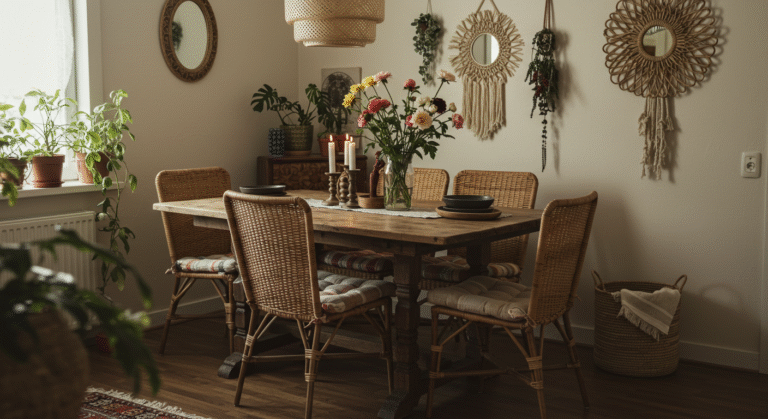
The Identity Anchor: Designing for Who You Are Now
The Space Reclamation Protocol handles the removal problem — stripping out environmental triggers tied to your ex. But removal alone creates a vacuum. An empty shelf where their photo sat is still a trigger. It's just a trigger shaped like absence instead of presence.
The second phase is what I call The Identity Anchor — deliberately filling your space with objects, colors, and arrangements that represent who you are as an individual, not who you were as a partner.
This matters more than most people realize. During a relationship, your living space becomes a negotiation. You wanted bold colors; you compromised on neutral. You wanted art that meant something to you; you hung what "went with the room." You wanted a reading corner; the space became a gaming setup. These compromises are normal in relationships. But they also mean your home stopped reflecting you — and after the breakup, you're living in a space that reflects a version of yourself that no longer exists.
I had a client who realized, three weeks post-breakup, that she didn't have a single piece of wall art she'd chosen herself. Everything in her apartment was a joint purchase or his preference. Her space wasn't just haunted by his absence — it had never been hers to begin with. The reclamation wasn't about removing him. It was about installing herself.
Here's how The Identity Anchor works:
Step 1: The Solo Preference Audit
Before you buy anything or change anything, answer these questions honestly: - What colors do I genuinely love? (Not "what goes together" — what makes your nervous system feel calm, energized, or happy?) - What did I stop doing or displaying because of the relationship? (Hobbies, collections, aesthetic preferences that got shelved during compromise?) - What would I choose if nobody else's opinion mattered?
Write these down. Most women I work with haven't asked themselves these questions in years. The relationship became the identity, and the space reflected the relationship, not the person. If you need structure for this kind of self-reflection, Untangle Your Thoughts has guided prompts specifically designed to help you reconnect with preferences that got buried under partnership compromise.
Step 2: One Room, One Statement
Don't try to overhaul everything at once. Choose one room — ideally your bedroom, since it's the most personal — and make one design decision that is unapologetically yours.
This could be: - A color you love that your ex hated (teal walls, a deep green duvet, dramatic dark florals) - Art that speaks to you specifically (not "living room appropriate" — something that makes you feel something) - A functional space for a hobby or interest that got deprioritized (reading corner, yoga space, craft area, music setup)
The psychological mechanism here is ownership signaling. When your brain registers "I chose this, for me, without compromise," it reinforces your identity as an autonomous individual. Every time you see that teal wall or sit in that reading corner, your nervous system gets the message: this space belongs to you.
Step 3: The Sensory Signature
Create a deliberate sensory identity for your home — a combination of scent, texture, and sound that belongs exclusively to your post-breakup chapter.
- Scent: Choose one candle, diffuser oil, or room spray you've never used before. Light it daily. Within two weeks, your brain will associate this scent with your current life, not your past relationship. - Texture: Add one tactile element that feels different from what existed before — a chunky knit blanket, velvet cushions, a linen throw. Texture changes register strongly in your nervous system. - Sound: Change your ambient soundtrack. If you watched TV together every evening, try music. If music was "your thing together," try podcasts or intentional silence. The auditory environment is a powerful trigger that most people overlook.
I recommend my clients create what I call a Reset Ritual — a specific sensory sequence they perform when they arrive home. Light the candle. Put on the playlist. Wrap in the new blanket. This replaces the Threshold Crash (grief at the door) with a deliberate sensory transition that signals: "I'm entering my space now."
Key Insights: - Removal of triggers creates a vacuum — you need to actively install identity markers, not just erase the ex - During relationships, living spaces reflect compromise, not individual identity — reclamation means rediscovering your own preferences - Ownership signaling (choosing things exclusively for yourself) reinforces autonomous identity in your nervous system - The Sensory Signature (new scent + texture + sound) creates a deliberate post-breakup chapter marker - The Reset Ritual replaces the Threshold Crash with a controlled sensory transition
Put It Into Practice: - Complete the Solo Preference Audit before making any purchases — use Untangle Your Thoughts to explore what preferences got buried during the relationship - Choose one room and make one unapologetically personal design decision this week - Create your Sensory Signature: pick a new scent, add one new texture, change your ambient soundtrack - Build a Reset Ritual for your entryway — a 60-second sensory sequence that replaces the Threshold Crash
Key Points
- Removal of triggers creates absence-shaped triggers — active identity installation is required
- Relationship compromise means your space stopped reflecting you individually years ago
- Solo Preference Audit: rediscover colors, hobbies, and aesthetics that got shelved during the relationship
- Ownership signaling: choosing things exclusively for yourself reinforces autonomous identity
- The Reset Ritual: a deliberate sensory sequence that replaces Threshold Crash grief with controlled transition
Practical Insights
- Complete the Solo Preference Audit using Untangle Your Thoughts before spending any money on redesign
- Make one unapologetically personal design choice in your bedroom this week
- Create a Sensory Signature: new scent + new texture + changed ambient soundtrack
- Build a 60-second Reset Ritual for when you walk through your front door
When You Can't Change the Space: The Overlay Method
Not everyone can rearrange furniture, repaint walls, or replace bedding. Maybe you're in a rental with restrictions. Maybe you're still sharing the space during the separation. Maybe your budget is truly zero. Maybe the lease is in their name and you're leaving soon but not yet.
The Space Reclamation Protocol still works — you just use The Overlay Method instead of full resets.
The Overlay Method doesn't change the bones of your space. It adds layers on top of existing elements to create enough sensory disruption that your brain registers novelty without requiring physical restructuring.
Here's how it works:
Textile Overlays The fastest, cheapest way to change how a room feels is to drape different textures over existing furniture. A throw blanket over a couch changes its visual identity, its texture when you sit, and even its scent (wash it with a new detergent). A different pillowcase — even just one — changes the micro-environment of your sleep. These aren't cosmetic upgrades. They're sensory pattern interrupts.
Scent Overlays If you can't remove their products from the bathroom (shared space situation), add yours. A new hand soap next to the sink. Your diffuser in the bedroom. A specific candle by the door. Scent overlays work because your brain processes them in the foreground — the new scent becomes the dominant association even when old ones remain in the background.
Light Overlays Change when and how you use light. If you always had overhead lights on in the evening, switch to a single lamp. Buy a $10 color-temperature bulb and set it to warm. Open curtains during times they were normally closed. Close them when they were open. Light pattern changes are subtle, but your brain tracks them. Different light = different chapter.
Sound Overlays This is the most overlooked overlay. The ambient sound profile of your home is deeply encoded — TV shows you watched together, the silence of waiting for them, specific music. Change it. Play background music you've never shared with them. Try ambient soundscapes (rain, cafe noise, instrumental). Even leaving a fan running changes the acoustic signature of a room.
Territorial Markers When you can't change the space, claim specific zones within it. This is especially important in shared-space separations. Designate one area — a corner, a chair, a section of counter — as exclusively yours. Place your objects there. Make it visually distinct from the shared environment. This gives your brain one space in the home that reads as "mine" even when the rest reads as "ours" or "theirs."
I've worked with clients who were stuck in shared apartments for months during separation. The ones who carved out even a single territorial marker — a reading chair with their blanket, their lamp, their book, their candle — reported significantly better emotional regulation than those who tried to share every space neutrally. Your brain needs at least one anchor point that belongs exclusively to you.
The Overlay Method isn't a lesser version of the full protocol. For many situations, it's the more practical one. The mechanism is the same: sensory disruption that forces your brain to build new associations. Whether you achieve that disruption by moving furniture or draping a blanket over it, the neural effect is real.
Key Insights: - The Overlay Method works when you can't physically restructure your space (rentals, shared spaces, zero budget) - Textile, scent, light, and sound overlays create enough sensory disruption to force new neural associations - Territorial markers (claiming one exclusive zone) provide critical identity anchoring in shared-space separations - Overlays work through the same mechanism as full resets — sensory pattern interruption
Put It Into Practice: - If budget is zero: rearrange what you can, drape different textiles over unchanged furniture, and change your ambient soundtrack - In a shared-space separation: designate one physical area as exclusively yours with distinct visual markers - Use scent overlays as your highest-priority change — a new hand soap costs under $5 and changes your most-visited room's sensory profile - If you're navigating the logistics of separating shared lives, territorial markers help you maintain emotional boundaries while sharing physical space
Key Points
- The Overlay Method creates sensory disruption without requiring physical restructuring
- Four overlay types: textile (texture/visual), scent (foreground dominance), light (pattern change), sound (acoustic signature)
- Territorial markers: claiming one exclusive zone provides critical identity anchoring in shared spaces
- A $5 hand soap change creates more neural disruption than no change at all — budget is not a barrier
- Same mechanism as full protocol: sensory pattern interruption forces new associations
Practical Insights
- Start with scent overlay — new hand soap under $5 changes your bathroom's sensory profile immediately
- Drape a new-textured throw blanket over your couch to change its visual and tactile identity
- In shared spaces, designate one exclusive zone with your objects, your lighting, your scent
- If separating shared lives, territorial markers maintain emotional boundaries while sharing physical space

The Emotional Surfacing Problem: What Comes Up When You Start Changing Things
I need to prepare you for something: The Space Reclamation Protocol works, but it doesn't feel good while you're doing it.
When you start physically changing your space — removing their things, rearranging furniture, replacing shared items — it surfaces grief you may have been avoiding. This is normal. It's actually the point.
I call this The Surfacing Effect: the phenomenon where physical changes to your environment activate emotional processing that was stuck.
Here's why it happens: as long as your environment stays the same, your brain can maintain a low-grade denial. Not conscious denial — environmental denial. The toothbrush is still there, so some part of your nervous system hasn't fully registered that the relationship is over. The couch is still in the same position, so your body still expects them to sit down next to you.
When you physically remove or change these elements, you're forcing your brain to confront what your environment was helping it avoid: this person is gone, and this space is now yours alone.
This means you might: - Cry while changing the bedsheets (you're not crying about sheets — you're crying about what the sheets represented) - Feel angry while removing their belongings (anger at the concrete evidence of ending, not at the objects) - Experience a grief wave while rearranging the living room (your body is releasing the motor patterns that included them) - Want to stop halfway and put everything back (your brain trying to return to the comfortable denial of unchanged environment)
All of this is The Surfacing Effect doing exactly what it should: moving stuck grief from your body into conscious awareness where you can actually process it.
Here's how to work with it instead of against it:
Plan for Processing Time Don't try to do the full protocol in one afternoon. Schedule Zone 1 (bathroom) for a day when you have emotional bandwidth. Give yourself 24 hours before moving to Zone 2. The surfacing needs time to settle.
Write Through It When emotions come up during space changes, stop and write. Not elaborate journaling — just capture what surfaced. "Changing the pillowcase made me remember Sunday mornings." "Removing his coffee mug from the cabinet felt like erasing him." These micro-acknowledgments prevent the grief from going back underground. Untangle Your Thoughts was designed for exactly this kind of in-the-moment emotional capture — structured enough to guide you when you're activated, but flexible enough for raw processing.
Distinguish Grief from Resistance Grief says: "This hurts because something real is ending." Resistance says: "If I don't change it, maybe it's not really over." Both feel similar in the moment. The difference: grief moves through you and eventually subsides. Resistance keeps you stuck in the same emotional loop indefinitely.
If you find yourself repeatedly unable to make changes — putting their toothbrush back, restoring the furniture to its original position — that's resistance, not grief. And it's a signal that your environment is actively participating in keeping you stuck.
Key Insights: - The Surfacing Effect: physical space changes activate stuck emotional processing — this is the goal, not a side effect - Environmental denial: unchanged spaces help your brain avoid fully registering the relationship's end - Emotional responses during reclamation (crying, anger, grief waves) are processing, not regression - Grief moves through and subsides; resistance keeps you cycling — learn to tell the difference
Put It Into Practice: - Schedule protocol zones on separate days with recovery time between — don't try to do everything at once - Keep Untangle Your Thoughts nearby during space changes to capture what surfaces in real-time - If you can't complete a change (resistance), note it without judgment — and try again in 48 hours - Remind yourself: the discomfort of changing your space is temporary; the discomfort of living in an unchanged trigger environment is indefinite
Key Points
- The Surfacing Effect: physical environment changes activate grief processing that was stuck
- Environmental denial: unchanged spaces help your brain avoid fully registering the relationship is over
- Emotional responses during reclamation are processing, not regression — crying while changing sheets is grief surfacing
- Grief moves through and subsides; resistance keeps you cycling in the same loop
- Plan for processing time between zones — don't attempt the full protocol in one day
Practical Insights
- Schedule Zone 1 for a day with emotional bandwidth; allow 24 hours before Zone 2
- Use Untangle Your Thoughts during space changes to capture surfacing emotions in real-time
- If you repeatedly restore things to their original state, you're experiencing resistance — try again in 48 hours
- The discomfort of change is temporary; the discomfort of an unchanged trigger environment is ongoing

Design Your Next Chapter: From Reclamation to Self-Expression
Once you've completed The Space Reclamation Protocol — disrupted the triggers, installed your identity anchors, processed what surfaced — something shifts. Your home stops feeling like a place where something ended and starts feeling like a place where something is beginning.
This is the phase where practical recovery meets creative self-expression. You've cleared the neurological debris. Now you get to build something that's actually yours.
A few principles I've seen work consistently:
Lead with How You Want to Feel, Not How It Should Look
Forget trends. Forget what looks good on social media. Ask yourself: when I walk into this room, how do I want to feel? Calm? Energized? Cozy? Powerful?
Then design backward from that feeling: - Calm: cool tones (sage, blue-gray, cream), soft textures, minimal visual clutter, natural light - Energized: warm tones (terracotta, mustard, coral), bold art, varied textures, bright lighting - Cozy: layered textiles, warm neutrals, soft lighting, enclosed feeling (canopy beds, reading nooks, draped fabrics) - Powerful: dramatic contrast (dark walls with bright accents), statement furniture, bold patterns, intentional lighting
Your living space should match your nervous system's current needs, not a Pinterest aesthetic. If you're in early recovery and your nervous system is activated, lean toward calm. If you're further along and craving vitality, lean toward energized. The right environment for your current chapter isn't the same as the right environment for your next one.
One Room at a Time, One Statement at a Time
Design paralysis is real, especially when you've been making compromises for years and suddenly have total freedom. The solution: one room, one bold choice. Let that choice inform the next one.
If you need a starting point, your bedroom is the room that matters most. It's where you begin and end each day, where your nervous system either resets or re-activates. Make that one room feel exactly like you — and let the rest evolve from there.
Invest in What You Touch Daily
Your bedding. Your towels. Your coffee mug. The chair you sit in every evening. These high-contact items have disproportionate impact on how your space feels because you interact with them constantly. A beautiful mug you chose for yourself does more for your daily experience than an expensive piece of art you walk past without noticing.
Permission to Be Bold
This is the part most women skip. After years of compromise, bold choices feel risky. What if it looks wrong? What if people judge it?
Here's what I tell my clients: your home is not a performance. Nobody needs to approve of your teal walls, your fairy-light canopy, or your maximalist gallery wall. The point isn't "good taste." The point is that every time you look at something you chose — boldly, without compromise — your nervous system gets the message: I am a person who makes choices. I have preferences. I act on them.
That's not interior design. That's identity reconstruction.
If you want design inspiration that actually encourages boldness rather than safe neutrals, Enchanted Spaces curates fantasy-inspired bedroom designs — from dark forest retreats to celestial sanctuaries to vintage romantic aesthetics — with direct "Shop the Look" product links for each design. It's specifically built for people who want their bedroom to feel like an escape, not a compromise.
Key Insights: - Design backward from feeling, not forward from aesthetics — match your space to your nervous system's current needs - One room, one bold choice prevents design paralysis while building momentum - High-contact items (bedding, towels, daily-use objects) have disproportionate impact on how your space feels - Bold personal choices are identity reconstruction — every uncompromised decision reinforces autonomous selfhood
Put It Into Practice: - Ask "How do I want to feel in this room?" before making any design decisions - Start with your bedroom — it's where your nervous system resets or re-activates daily - Invest first in what you touch daily: bedding, towels, your favorite mug, your evening chair - Browse Enchanted Spaces for bedroom design concepts that encourage boldness over compromise — each room includes direct product links - If you're also working on redefining your identity after the breakup, your space design is a physical extension of that same process
Key Points
- Design backward from feeling (calm, energized, cozy, powerful) — match space to nervous system needs
- One room, one bold choice prevents paralysis and builds design momentum
- High-contact items (bedding, towels, daily objects) have disproportionate impact on daily experience
- Bold uncompromised choices are identity reconstruction — each one reinforces autonomous selfhood
- Bedroom is the highest-priority room: where your nervous system resets or re-activates daily
Practical Insights
- Answer 'How do I want to feel in this room?' before browsing any design inspiration
- Start with your bedroom and invest in what you touch daily (bedding, towels, mug, chair)
- For bold bedroom design concepts with product links, explore Enchanted Spaces
- Space design extends identity reclamation work — your environment is a physical mirror of your evolving self
Frequently Asked Questions
How soon after a breakup should I change my living space?
Start with small changes immediately — even in the first week. Replacing bathroom products (new hand soap, new shampoo) takes five minutes and creates immediate sensory disruption. Larger changes like rearranging furniture and new bedding are most impactful in weeks 1-4 when the Ghost Room Effect is strongest. You don't need to wait until you 'feel ready' — the environmental triggers are actively slowing your recovery every day they remain.
What if I can't afford to redecorate after a breakup?
The Space Reclamation Protocol works at every budget, including zero dollars. Rearranging furniture, switching which side of the bed you sleep on, moving items to different cabinets, deep cleaning with any new product, and changing your ambient soundtrack all cost nothing. The mechanism is sensory disruption, not spending — a rearranged room creates the same neural pathway interruption as a redecorated one.
Why does my apartment feel wrong after a breakup even though I like it?
Your brain built context-dependent memory associations between your living space and your ex. Every surface, scent, and sightline is tagged with relationship data. When you re-enter the space, those associations activate automatically — your brain re-experiences the loss regardless of how much you like the physical space. This is the Ghost Room Effect, and it resolves through deliberate sensory changes, not just time.
Should I get rid of everything my ex gave me?
Not necessarily. The goal isn't erasure — it's disrupting environmental triggers. Items that cause an immediate grief response when you see them should be boxed and stored, not necessarily discarded. Items that feel neutral can stay. The test: does seeing this object activate your nervous system or not? If yes, remove it from your daily environment. You can revisit stored items in 3-6 months when the associations have weakened.
Why do I feel worse after starting to change my space?
This is The Surfacing Effect — physical environment changes activate grief processing that was stuck. As long as your space stayed the same, your brain maintained a form of environmental denial. When you physically change things, you force your brain to confront the ending it was avoiding. The emotions that surface are processing, not regression. They're temporary and necessary. Plan recovery time between changes.
Does redecorating after a breakup actually help with healing?
Yes, and the mechanism is neuroscience, not just psychology. Context-dependent memory means your brain encoded your ex into your home's sensory landscape. Changing that landscape forces your nervous system to build new associations unlinked to the relationship. Research on environmental context and memory reconsolidation supports what I see clinically: women who deliberately restructure their space report faster emotional regulation and better sleep quality.
What room should I change first after a breakup?
Start with the bathroom. It's small (complete reset in 30 minutes), cheap (under $20 for new products), and scent-based — and scent is the most powerful memory trigger. You use it every morning and evening, so new associations build quickly. The bedroom should be second priority because it directly affects sleep quality, which is often disrupted by environmental triggers after a breakup.
How do I reclaim a shared space during separation?
Use The Overlay Method and territorial markers. When you can't physically restructure shared space, add layers — a new throw blanket over the couch, your own scent by the door, different lighting in the evening. Most importantly, designate one physical area as exclusively yours with distinct visual markers (your chair, your lamp, your blanket, your objects). Your brain needs at least one space that reads as 'mine' even when the rest reads as 'ours.'
Conclusion
Your home isn't just where you live. After a breakup, it's either a recovery environment or a re-traumatization environment — and the difference depends on whether you leave it unchanged or take deliberate action.The Ghost Room Effect means every room carries invisible imprints of your former relationship. Your nervous system responds to those imprints automatically — the Threshold Crash at the door, the Time-of-Day Triggers in the evening, the Phantom Routines that reach for someone who isn't there.The Space Reclamation Protocol gives you a systematic way to interrupt those patterns: Bathroom first (scent-based reset, 30 minutes), Bedroom second (sleep and intimacy disruption), Shared Spaces third (movement pattern rewiring). At every budget level, from $0 to $200, the mechanism is the same: sensory disruption that forces your brain to build new associations.Then The Identity Anchor phase installs something better in the space you've cleared — your Solo Preference Audit, your Sensory Signature, your Reset Ritual. Your home stops being a museum of what ended and starts being a foundation for what's next.Expect The Surfacing Effect. Changing your space will bring up emotions you've been avoiding. That's processing, not regression. Work with it. Write through it. Use Untangle Your Thoughts to capture what comes up so it doesn't go back underground.And when you're ready to move from reclamation to self-expression — to design a space that reflects who you are becoming, not who you were with them — give yourself permission to be bold. Your home is not a compromise anymore. For inspiration that matches that boldness, Enchanted Spaces is a good place to start.Your space, for real this time. Your rules, without compromise. Your nervous system will thank you.