Post-Breakup Workout Plan: The Recovery Phase Exercise Protocol
Introduction
You've probably heard that exercise helps after a breakup. Run it off. Hit the gym. Get your body moving. The advice is correct — but incomplete in a way that matters.The wrong exercise at the wrong recovery phase can actively worsen your symptoms. High-intensity training during acute grief elevates the cortisol that's already destabilizing you. Starting a physically demanding new regimen before your nervous system has stabilized sets you up for failure that reinforces the sense that nothing is working. And exercise framed as body improvement — getting a revenge body, becoming more attractive — keeps you in the external calibration dependency that the breakup already disrupted.
Quick Answer: Post-breakup exercise isn't one thing. It's three different things at three different phases, each serving a specific neurological function. Getting the phase wrong produces the wrong result. Getting it right accelerates recovery in measurable ways.I call this The Recovery Phase Exercise Protocol: a three-phase model that matches exercise type to your nervous system's actual needs at each stage of breakup recovery.After years of working with women through post-breakup recovery, I've found that the women who use exercise most effectively during recovery aren't necessarily the ones who work out hardest. They're the ones who understand what their nervous system needs from exercise at each stage — and choose accordingly.

What Exercise Is Actually Doing After a Breakup (And Why Phase Matters)
Post-breakup exercise affects your recovery through three distinct neurological pathways. Understanding all three — and which one needs prioritizing at each phase — is what makes the protocol work.
Pathway 1: Cortisol Regulation
Breakup grief elevates cortisol — the stress hormone that heightens threat detection, disrupts sleep, and amplifies emotional reactivity. Cortisol is why the first weeks after a breakup feel physically awful: the tight chest, disrupted sleep, inability to concentrate, hypervigilance.
Moderate-intensity physical movement is the most reliable non-pharmaceutical cortisol regulation tool available. Specifically, 20-30 minutes of moderate aerobic activity — sustained movement at a pace where you could hold a conversation — consistently reduces cortisol levels for 4-6 hours post-exercise.
Critical note: high-intensity exercise can temporarily increase cortisol before reducing it. In Phase 1, when cortisol is already chronically elevated, very high-intensity exercise can worsen the symptom profile rather than improving it. Moderate intensity is specifically prescribed for this phase, not as a compromise but as the clinically correct choice.
Pathway 2: Dopamine Reactivation
The relationship provided regular dopamine activation — through anticipation, interaction, intimacy, and even the anxiety of relationship uncertainty. When no contact begins and the relationship ends, the dopamine system becomes depleted. This is why the world feels flat and colorless in the post-breakup period: the reward system isn't broken, but its primary activation source is gone.
Exercise reactivates the dopamine system through a specific mechanism: progressive challenge. When you attempt something physically difficult, succeed at it, and attempt something slightly harder the next time, the dopamine system registers progress and responds with reward activation. This is why activities with measurable progression (heavier weights, faster times, more reps, harder skill levels) produce stronger dopamine effects than steady-state activities performed at the same level repeatedly.
This pathway becomes most relevant in Phase 2, once the acute cortisol crisis has reduced enough that the nervous system can engage with challenge rather than just seek to reduce threat.
Pathway 3: Embodiment
As I explain in detail in Body Self-Acceptance After a Breakup, the breakup disrupts body image through The External Mirror Effect — the loss of a partner's perception as a calibration source. This leaves body perception volatile and prone to harsh self-criticism.
Attention-requiring physical activity — movement that demands your focus to execute — forces embodiment: experiencing your body as a functional subject rather than observing it as an aesthetic object. During a climb, a dance sequence, or a technical lifting movement, your body is something that does, not something that is judged.
This is the pathway that makes exercise useful for body image recovery, and it's specifically the attention-requirement that activates it, not the exercise type or intensity.
Why Phase Matching Matters:
All three pathways operate throughout recovery, but their relative importance shifts:
- Phase 1 (Weeks 1-8): Cortisol regulation is primary. The nervous system is in crisis. Exercise should reduce threat, not add to it. - Phase 2 (Weeks 8-20): Dopamine reactivation becomes possible. The nervous system has stabilized enough to engage with progressive challenge. - Phase 3 (Weeks 20+): All three pathways are available. Exercise can serve performance, identity, and embodiment goals simultaneously.
Key Insights: - Three exercise pathways: cortisol regulation, dopamine reactivation, embodiment - Phase 1: cortisol regulation is primary — moderate intensity, not high intensity - Phase 2: dopamine reactivation through progressive challenge becomes the priority - Phase 3: all three pathways available simultaneously - Wrong exercise type at wrong phase can worsen the specific symptom the exercise was meant to address
Put It Into Practice: - Identify your current recovery phase before choosing an exercise approach - If you're in Phase 1 and high-intensity training is making you feel worse, this explains why — switch to moderate intensity - If you're in Phase 2 and steady-state cardio isn't producing mood benefit, introduce progressive challenge
Key Points
- Three distinct exercise pathways: cortisol regulation, dopamine reactivation, embodiment
- High-intensity exercise can worsen Phase 1 cortisol symptoms — moderate intensity is specifically correct
- Dopamine reactivation requires progressive challenge, not steady-state repetition
- Embodiment is activated by attention-requiring movement, not by exercise type or intensity
- Phase matching is what makes exercise effective — wrong phase produces wrong result
Practical Insights
- Identify your current recovery phase before choosing an exercise approach — the protocol differs significantly
- If high-intensity training is making you feel worse in Phase 1, this is the mechanism — switch to moderate and sustained
- If steady-state cardio isn't lifting mood in Phase 2, introduce progressive challenge: heavier weights, harder routes, skill progression

Phase 1 Exercise Protocol: Cortisol Regulation (Weeks 1-8)
Phase 1 is the acute recovery period — typically Weeks 1-8, characterized by disrupted sleep, emotional volatility, difficulty concentrating, and physical restlessness. The nervous system is running in a chronic stress state, with cortisol elevated and the attachment withdrawal symptoms at their most intense.
The exercise goal in Phase 1 is singular: cortisol reduction. Not body composition. Not fitness improvement. Not demonstrating resilience. Cortisol reduction.
This singular focus determines every exercise prescription for this phase.
Phase 1 Exercise Characteristics:
Intensity: Moderate, sustained Target the zone where you can hold a conversation but your breathing is noticeably deeper — roughly 60-70% of your maximum heart rate. This intensity zone consistently reduces cortisol in the 4-6 hours following exercise. Below this zone, the cortisol effect is minimal. Above it — hard intervals, maximum effort — cortisol can spike before it reduces, which in Phase 1 extends rather than interrupts the stress cycle.
Duration: 20-30 minutes The cortisol-reducing effect of moderate aerobic exercise plateaus around 30 minutes. Longer sessions in Phase 1 aren't better — they extend the physical stress load without additional cortisol benefit and can increase fatigue that further disrupts sleep.
Frequency: Daily, or at least 5x per week In Phase 1, the question isn't how to maximize fitness gains — it's how to maintain a daily cortisol regulation habit that keeps the stress response from compounding over consecutive days. Daily moderate movement is more effective for this than less frequent higher-intensity sessions.
Attention requirement: Moderate Exercise that requires some attention (avoiding obstacles on a trail run, following a yoga sequence, maintaining swimming form) provides embodiment benefit without demanding the cognitive resources that Phase 1 processing has depleted.
Phase 1 Exercise Options:
- Walking (outdoor preferred): 25-30 minutes at a pace that elevates breathing. Outdoor environments add the additional benefit of reduced cortisol from natural exposure — trail walking is more effective than treadmill for this reason. - Yoga (flow or moderate vinyasa): Provides embodiment, moderate cortisol reduction, and the specific benefit of vagal tone activation through breath work, which directly downregulates the stress response. - Swimming: Effective cortisol regulation, strong embodiment due to the attention required for technique, and the additional benefit of sensory regulation from water immersion. - Cycling (moderate pace): Outdoor cycling adds nature exposure; stationary cycling provides a controllable indoor option when weather or motivation creates barriers.
What to Avoid in Phase 1:
- High-intensity interval training (HIIT) — Cortisol spike before reduction is counterproductive in Phase 1 - Heavy strength training to failure — Significant physical stress load when the nervous system is already stressed - Exercise framed as body change — "Working on a revenge body" or "getting back in shape" activates external calibration patterns that compound the External Mirror Effect - Using exercise to suppress emotions — Exercise during Phase 1 should coexist with emotional processing, not replace it
The Phase 1 Minimum Effective Dose:
If the full protocol feels unmanageable in Phase 1 — which it sometimes does, because acute grief is physically exhausting — the minimum effective dose is 20 minutes of outdoor walking at a breathing-elevated pace, daily. This single behavior, maintained consistently, produces meaningful cortisol regulation and sleep quality improvement within 2 weeks.
Key Insights: - Phase 1 goal: cortisol reduction only — not fitness, not body change, not demonstrating resilience - Moderate intensity (60-70% max heart rate) produces consistent cortisol reduction; high intensity can worsen Phase 1 symptoms - 20-30 minutes daily is more effective than less frequent higher-intensity sessions - Minimum effective dose: 20 minutes outdoor walking at elevated breathing pace - Avoid exercise framed as body change — it activates external calibration patterns
Put It Into Practice: - Schedule 20-30 minutes of Phase 1 exercise for today — not when you feel like it, but now - Choose outdoor over indoor when possible — natural environment adds cortisol reduction beyond the exercise itself - Track sleep quality, not fitness metrics, as your Phase 1 progress indicator
Key Points
- Phase 1 goal: cortisol reduction only — not fitness improvement or body change
- 60-70% max heart rate is the effective zone — high intensity is counterproductive in Phase 1
- 20-30 minutes daily is the optimal Phase 1 dose — longer isn't better
- Minimum effective dose: 20 minutes outdoor walking at elevated breathing pace, daily
- Avoid HIIT, heavy lifting to failure, and body-change framing in Phase 1
Practical Insights
- Schedule the 20-30 minutes now — don't wait to feel motivated. Phase 1 motivation is always low; scheduling bypasses it
- Outdoor always beats indoor in Phase 1 for cortisol reduction — nature exposure is additive
- Track sleep quality as your Phase 1 progress indicator, not fitness metrics
Phase 2 Exercise Protocol: Dopamine Reactivation (Weeks 8-20)
Phase 2 begins when the acute cortisol crisis has reduced enough that your nervous system can engage with challenge rather than just seeking to reduce threat. You'll know you're entering Phase 2 when: sleep is more stable, emotional intensity is lower (though not absent), and you have occasional windows of genuine engagement with activities.
The exercise goal in Phase 2 shifts: dopamine reactivation through progressive challenge. The flat, colorless quality of Phase 1 — the anhedonia, the difficulty finding anything genuinely interesting — responds to this specific mechanism. Progressive challenge, completed successfully, activates the dopamine reward system in a way that steady-state activity does not.
What Progressive Challenge Means:
Progressive challenge means the exercise becomes incrementally harder over time — in a measurable way you can track. This is the mechanism that activates the dopamine system, not exercise intensity per se.
- Week 1: You can do 3 sets of 8 reps at X weight - Week 2: You progress to 3 sets of 10 reps, or a slightly heavier weight - Week 3: You progress again
The dopamine activation comes from the measurable progress — from seeing a number go up, a time go down, a skill become more natural. Your brain registers that effort produces results, which is the specific calibration the dopamine system needs after the relational loss disrupted its primary reward pathway.
Phase 2 Exercise Characteristics:
Intensity: Variable — challenging sets interspersed with recovery Unlike Phase 1's consistent moderate intensity, Phase 2 can include higher-intensity efforts — because the cortisol crisis has reduced and the nervous system can process the spike-and-reduce pattern appropriately now.
Structure: Progressive, with measurable markers Write down what you do. Track the numbers. The dopamine reactivation mechanism requires the feedback loop of visible progress — you need to see the improvement to get the neurochemical reward from it.
Duration: 30-50 minutes, 3-5 times per week Phase 2 allows for longer, more structured sessions. Strength training sessions of 35-50 minutes, or more structured cardio with interval progressions, fit this phase well.
Phase 2 Exercise Options:
- Strength training with progressive overload: The clearest application of the progressive challenge principle. Track weights, reps, and sets. The progression over weeks is the mechanism. - Running with pace progression: If you run at the same easy pace every session, dopamine activation is minimal. Building toward a faster pace, a longer distance, or a structured interval program creates the progressive challenge the system needs. - Rock climbing, martial arts, dance: High attention-requirement activities with clear skill progression levels. These combine embodiment (high attention requirement) with progressive challenge (skill advancement is trackable). - Sport teams or classes with measurable improvement: Any activity where you can tell you're getting better — a fitness class where the instructor notes your improvement, a recreational sport where your performance develops.
Introducing Performance Goals:
Phase 2 is when performance-oriented goals become appropriate and useful. A 5K registration. A strength target. A skill-based milestone. These goals work in Phase 2 because they activate forward-oriented motivation at a stage when recovery has created enough stability to act on that motivation.
They don't work in Phase 1 because Phase 1's primary need is stabilization, not forward projection. Introducing ambitious performance goals during acute crisis typically produces failure (the goal is set when motivation is high, then impossible to maintain when motivation fluctuates during grief) which compounds the sense that nothing is working.
Maintaining Phase 1 Foundation: Phase 2 doesn't replace Phase 1 exercise — it adds to it. The daily moderate movement that regulated cortisol in Phase 1 remains valuable as a maintenance behavior. Phase 2 adds progressive challenge sessions 3-5 times per week on top of the ongoing baseline movement.
Key Insights: - Phase 2 goal: dopamine reactivation through progressive challenge - Progressive challenge requires measurable markers — write down what you do, track the numbers - The dopamine feedback loop requires visible progress, not just effort - Performance-oriented goals (5K, strength target) become appropriate in Phase 2 but are counterproductive in Phase 1 - Phase 2 adds progressive sessions to Phase 1 foundation — doesn't replace it
Put It Into Practice: - Choose one exercise with a clear progressive challenge structure and start tracking metrics this week - Write down what you do every session — the written record is the feedback loop - If you're setting a performance goal, make it 6-8 weeks out, not 2 weeks
Key Points
- Phase 2 goal: dopamine reactivation through progressive challenge — measurable improvement over time
- Progressive challenge requires tracking: weights, times, reps — the visible progress is the dopamine mechanism
- Higher-intensity efforts become appropriate in Phase 2 as cortisol crisis has reduced
- Performance goals (5K, strength targets) work in Phase 2, are counterproductive in Phase 1
- Phase 2 adds progressive sessions to Phase 1 baseline — doesn't replace daily moderate movement
Practical Insights
- Choose one exercise with trackable progression this week and write down session metrics from Day 1
- The written record is the feedback loop — visible numbers going in the right direction activate the dopamine mechanism
- Set performance goals 6-8 weeks out, not 2 weeks — achievable timeline reduces failure risk and sustains motivation

Phase 3 Exercise Protocol: Identity and Performance (Weeks 20+)
Phase 3 begins when the primary recovery work is substantially complete — when grief is background rather than foreground, when the identity reconstruction that breakups require is mostly done, when daily functioning feels like your own again rather than something you're managing.
Exercise in Phase 3 can serve all three pathways simultaneously and can be oriented toward genuine performance and identity goals, not just recovery support.
What Changes in Phase 3:
The primary shift in Phase 3 is motivation quality. In Phase 1, the motivation to exercise is almost entirely external — you exercise because you know you should, because someone told you it helps, because you're trying to do something right when everything feels wrong. In Phase 2, motivation becomes partially internal — you exercise because the progressive challenge is producing visible results that feel genuinely rewarding.
In Phase 3, motivation can be authentically self-directed for the first time: you exercise because you want to, because it's part of who you are, because the goals you're pursuing reflect your actual values and interests rather than breakup-driven coping.
This shift matters because exercise that's driven by genuine preference and identity is significantly more sustainable long-term than exercise driven by recovery necessity or social obligation.
Phase 3 Exercise Characteristics:
Goal: Performance, identity, enjoyment All three are legitimate Phase 3 goals. The injury of the external calibration framework — exercising to be seen differently, to become more attractive to a new partner, to demonstrate changed circumstances — is less relevant in Phase 3 because the external calibration dependency has been substantially reduced by the recovery work done in Phases 1 and 2.
Intensity and structure: Self-directed In Phase 3, your exercise choices should reflect your actual preferences and performance goals, not a therapeutic protocol. If you love HIIT, do HIIT. If you want to train for a marathon, train for a marathon. If you want to get strong, follow a strength program.
The Identity Signal Function: Exercise in Phase 3 also serves what I call the Identity Signal Function: consistent physical practice becomes part of how you know and recognize yourself. "I'm someone who runs" or "I'm someone who lifts" or "I'm someone who does martial arts" — these are identity statements that exist independently of any relationship context.
This function is particularly meaningful after a long relationship, where significant aspects of identity were shared or defined in relation to a partner. Physical practice that's entirely yours — that you chose, that you built, that belongs to the current version of you — contributes to the identity reconstruction that recovery requires.
Maintaining Phases 1 and 2 Foundations: The daily moderate movement from Phase 1 remains valuable in Phase 3 as a cortisol management baseline — particularly during stressful periods when the nervous system needs reliable regulation. The progressive challenge structure from Phase 2 can be maintained within whatever activity you choose. The foundations don't expire; they just become integrated into a broader, self-directed practice.
Key Insights: - Phase 3 motivation quality shifts from external obligation to genuine self-direction - All three exercise pathways available simultaneously — cortisol, dopamine, embodiment - Identity Signal Function: consistent physical practice becomes an identity marker independent of relationship context - Phase 3 exercise choices should reflect genuine preferences, not therapeutic prescription - Phases 1 and 2 foundations remain valuable and integrate into Phase 3 practice
Put It Into Practice: - Identify one physical activity you would pursue regardless of recovery status — that's your Phase 3 anchor - Notice if your exercise motivation is external (should), partially internal (results), or authentically self-directed (want) — this locates your current phase - The Identity Signal Function: what physical practice could become part of how you know yourself, independent of anyone else?
Key Points
- Phase 3 motivation is authentically self-directed — exercise because you want to, not because recovery requires it
- All three pathways available simultaneously: cortisol, dopamine, embodiment
- Identity Signal Function: physical practice becomes an identity marker independent of relationship context
- Exercise choices should reflect genuine preferences in Phase 3 — no therapeutic prescription required
- Phases 1 and 2 foundations integrate naturally into Phase 3 practice
Practical Insights
- Identify one physical activity you'd pursue regardless of recovery status — that's your Phase 3 anchor practice
- Test your current motivation quality: is it external obligation, results-driven, or genuinely self-directed? This locates your phase
- What physical practice could become an identity statement about who you are now, independent of the relationship?
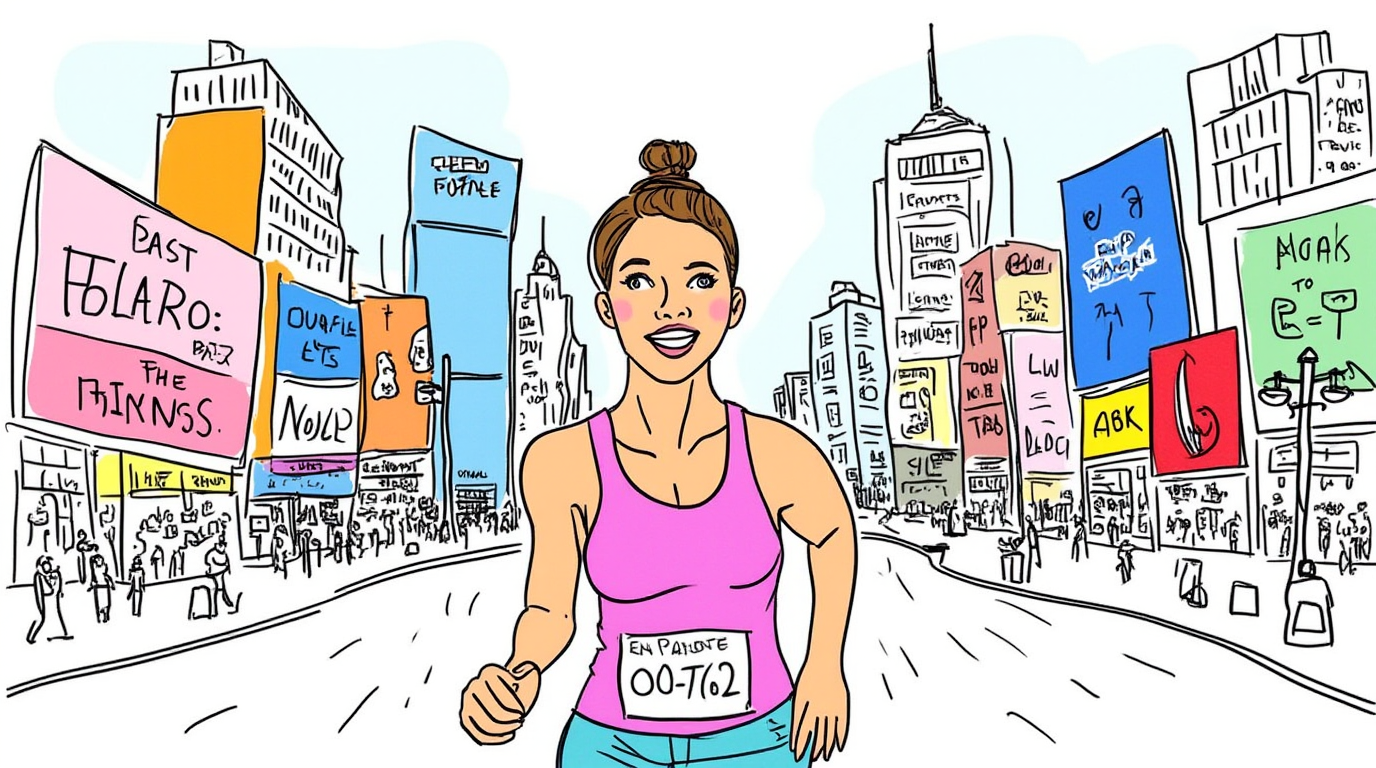
Exercise and the Body Image Recovery Process
Exercise is uniquely positioned to support body image recovery after a breakup — but only when it's framed correctly.
As detailed in Body Self-Acceptance After a Breakup: The External Mirror Effect, the breakup disrupts body image by removing the partner's perception as a calibration source. The body-image system becomes volatile without a stable reference point. Exercise is one of the most effective tools for rebuilding an internal calibration point — but not through any mechanism related to how your body looks.
The Appearance-Framing Trap:
The most common post-breakup exercise framing — "work on yourself," "get your body back," "revenge body," "become the best version" — activates the external calibration dependency rather than resolving it.
If the goal of your exercise is to look a certain way to be perceived differently by a new partner, your ex, or a general social audience, you're reinforcing the same external calibration pattern that the breakup disrupted. You're replacing one external mirror with another, not rebuilding an internal reference point.
The exercise that serves body image recovery is oriented toward function and sensation, not appearance. What does my body do? What does it feel like? What is it capable of? These are the questions that build the interoceptive foundation — the internal body sense — that The External Mirror Effect disrupted.
What Exercise-Based Body Image Recovery Looks Like:
- Post-workout functional inventory: After each session, before reaching for the mirror: what did my body just do? What did it feel like to do it? What did I notice about its capacity that I didn't know before? - Capability milestones over appearance milestones: Track personal records, skill acquisition, and physical capability markers rather than body composition or appearance metrics - Attention-requiring movement: Yoga, climbing, martial arts, dance — activities that require your full attention to execute force the body-as-subject experience that builds interoceptive fluency
This framing isn't about avoiding appearance goals permanently. It's about building the internal calibration foundation first — so that when aesthetic goals become relevant, they're being evaluated from a stable internal reference point rather than from a volatile, externally-dependent one.
The Integration Point:
The Recovery Phase Exercise Protocol and the body image recalibration work in Body Self-Acceptance After a Breakup are designed as complementary. The Functional Body Audit described there can be integrated with the post-workout inventory described here — running the audit immediately post-exercise, when the interoceptive state is most accessible.
Key Insights: - Appearance-framing in post-breakup exercise reinforces external calibration dependency rather than resolving it - Exercise supports body image recovery through function and sensation, not appearance - Post-workout functional inventory builds the interoceptive foundation that The External Mirror Effect disrupted - Capability milestones (personal records, skill acquisition) serve recovery; appearance milestones extend the calibration problem - The workout protocol and Functional Body Audit work together — run the audit post-exercise for maximum interoceptive access
Put It Into Practice: - Replace appearance milestone tracking with capability milestone tracking during recovery phases - Run a brief post-workout functional inventory: what did my body just do, what did it feel like, what's its capacity? - If your current exercise motivation is primarily appearance-based, examine whether it's serving recovery or extending calibration dependency - See Body Self-Acceptance After a Breakup for the full Functional Body Audit and Recalibration Protocol
Key Points
- Appearance-framing in post-breakup exercise reinforces external calibration dependency — replaces one mirror with another
- Exercise supports body image recovery through function and sensation, not appearance improvement
- Post-workout functional inventory builds interoceptive foundation after The External Mirror Effect
- Capability milestones serve recovery; appearance milestones extend the calibration problem
- Functional Body Audit runs most effectively post-exercise — interoceptive access is highest then
Practical Insights
- Replace appearance tracking with capability tracking: personal records, skill acquisition, endurance improvements
- Run a 2-minute post-workout functional inventory: what did my body do? What did it feel like? What surprised me about its capacity?
- See Body Self-Acceptance After a Breakup for the full Recalibration Protocol that integrates with this exercise framework
Frequently Asked Questions
What kind of exercise is best after a breakup?
It depends entirely on your recovery phase. In Phase 1 (Weeks 1-8), moderate-intensity movement for 20-30 minutes daily is most effective — this directly reduces the elevated cortisol that produces the physical symptoms of acute grief. In Phase 2 (Weeks 8-20), progressive challenge activities (strength training with increasing weights, running with pace progression) reactivate the dopamine system. In Phase 3 (Weeks 20+), self-directed exercise based on genuine preference becomes appropriate.
Can exercise help with breakup recovery?
Yes, through three specific mechanisms: cortisol regulation (moderate-intensity aerobic movement reduces the stress hormone driving Phase 1 symptoms), dopamine reactivation (progressive challenge rebuilds reward system function after the relational dopamine source is removed), and embodiment (attention-requiring movement rebuilds a functional internal body relationship disrupted by The External Mirror Effect). The mechanism matters as much as the activity.
Should I start intense workouts after a breakup?
Not in Phase 1. High-intensity exercise can temporarily spike cortisol before reducing it — in the acute recovery phase when cortisol is already chronically elevated, this worsens rather than improves the symptom profile. Moderate sustained intensity is the Phase 1 prescription. High-intensity training becomes appropriate in Phase 2 when the acute cortisol crisis has resolved.
Will working out after a breakup improve my body image?
Only if it's framed correctly. Exercise oriented toward how your body looks reinforces the external calibration dependency that the breakup disrupted — you're replacing one external mirror with another. Exercise oriented toward what your body does and feels (functional framing, capability milestones, attention-requiring movement) builds the internal calibration point that body image stability requires. The activity matters less than the orientation.
How soon after a breakup should I start exercising?
Day 1, at Phase 1 intensity. The minimum effective dose — 20 minutes of outdoor walking at a pace that elevates your breathing — can begin immediately and provides measurable cortisol reduction within the first week. You don't need motivation to start. You need a scheduled time and low enough intensity that motivation isn't required to complete it.
What is the best exercise to help with breakup anxiety?
For anxiety specifically, the most effective Phase 1 interventions are: moderate-intensity outdoor walking or running (cortisol regulation plus natural environment exposure), yoga with breath work (cortisol reduction plus vagal tone activation, which directly downregulates the anxiety response), and swimming (cortisol regulation plus strong embodiment through water immersion and technique attention requirement). All three address the neurochemical mechanism driving the anxiety.
Can I use working out to cope with a breakup?
Yes, as one tool within a broader recovery approach — not as a replacement for emotional processing. Exercise during Phase 1 should coexist with grief processing (journaling, therapy, support networks), not replace it. Using exercise to suppress rather than regulate emotion pushes grief processing into a delayed crash. The goal is using exercise to reduce the cortisol that makes processing harder, while still doing the processing.
Why does exercise feel so hard after a breakup?
Because your system is running on depleted resources. Social Capacity Depletion (the reduction of available bandwidth when breakup processing consumes the same resources needed for other activities) affects physical motivation as much as social motivation. This is normal and temporary. The minimum effective dose — 20 minutes of moderate walking — is deliberately set low to work within the depleted resource state rather than requiring motivation that doesn't currently exist.
Conclusion
Post-breakup exercise isn't a single recommendation — it's three different interventions at three different phases, each serving a specific neurological function.Phase 1: moderate-intensity daily movement that regulates cortisol during the acute crisis. Phase 2: progressive challenge that reactivates the dopamine system as the acute phase resolves. Phase 3: self-directed practice oriented toward genuine performance and identity goals.The common thread across all three phases is orientation: exercise that serves your nervous system's actual current needs produces recovery benefits. Exercise framed as body change, appearance improvement, or external validation extends the patterns you're trying to recover from.Identify your current phase. Choose the protocol that matches it. Track the indicators that are relevant to that phase — sleep quality in Phase 1, progressive metrics in Phase 2, genuine preference and enjoyment in Phase 3.For the body image dimension of this work, integrate the post-workout functional inventory with the Functional Body Audit from Body Self-Acceptance After a Breakup. The two systems are designed to work together.