Physical Confidence After a Breakup: The Embodiment Rebuild Protocol That Restores Felt-Sense Agency
Introduction
About six weeks after a breakup, my client Jen told me something I've heard from dozens of women: "I don't feel like I have a body anymore. I feel like I'm dragging around a costume that used to fit." She wasn't talking about weight or appearance. She was describing what happens when relationships end and the felt sense of being at home in your physical self goes with them.Most advice about post-breakup physical confidence misses this. It tells you to work out, dress better, do squats, get a haircut. The advice treats physical confidence as an aesthetic problem — as if confidence will return when your body looks different. It won't, because the issue isn't appearance. It's the disconnection between your sense of self and your physical experience that long relationships often produce, and that breakups expose.Real physical confidence is felt-sense agency — the embodied knowledge that you can move through the world in your body, take up appropriate space, exert effort, recover from effort, and trust your body to do what you need it to do. After a breakup, that felt sense often collapses, and rebuilding it requires specific work that has nothing to do with how you look. It has to do with how you live in the body you're in.Quick Answer: Physical confidence after a breakup is felt-sense agency — your embodied capacity to inhabit your body and act through it. The Embodiment Rebuild Protocol restores this through four sequential layers of work: Reconnection (returning to body awareness), Capability (rebuilding functional movement), Expression (developing physical self-articulation), and Integration (consolidating the rebuilt embodiment into daily life).The four layers: 1. Reconnection — re-establishing felt-sense awareness of your body 2. Capability — rebuilding functional movement and physical competence 3. Expression — developing body language, presence, and self-articulation 4. Integration — consolidating embodiment into daily life and relationshipsThis is the framework I built after watching aesthetic-only post-breakup fitness regimens produce thinner women who still didn't feel at home in their bodies. Aesthetic change without embodiment work doesn't restore confidence. Let me walk you through what does.

Why Physical Confidence Collapses After a Breakup (The Mechanism)
Long relationships shape your physical experience in ways most people don't consciously notice. Your partner's body becomes part of your felt sense of self — through co-sleeping, through touch, through the daily small physical exchanges of shared life. Your body adapted to theirs. Your nervous system regulated through their nervous system. Your felt sense of taking up space in the world was partially anchored by their consistent physical presence.
When the relationship ends, this entire physical scaffolding disappears in days. Your bed feels different. Your body feels different. The way you walk through the house, the way you sit on the couch, the way you exist in space — all of it has been calibrated to a partnership that's gone, and the calibration doesn't update overnight. This is what I call Embodiment Disruption, and it's the actual mechanism behind post-breakup physical confidence collapse.
The four signatures of Embodiment Disruption.
Signature 1: Felt-sense fog. You don't quite know what your body wants or needs. Hunger signals get muddled. Fatigue and emotional exhaustion become hard to distinguish. You're not sure if a sensation is physical, emotional, or both. The interoceptive accuracy that lets you read your body's signals is temporarily reduced.
Signature 2: Spatial uncertainty. You take up less space than you used to, or more, in ways that don't feel deliberate. Your posture changes. Your movement patterns shrink. You walk through public spaces differently. The relational scaffolding that anchored your sense of taking up space is gone, and your body is recalibrating without a clear reference.
Signature 3: Touch hunger or touch aversion. Some women report intense touch hunger — wanting physical contact with anyone, almost desperately. Others report touch aversion — even friendly hugs feel intrusive. Both responses are about the same thing: a body that was getting regular regulated touch suddenly isn't, and the system is responding either by seeking replacement touch or by protecting against further loss.
Signature 4: Capability doubt. You start to question whether you can do physical things you used to do without thinking. Carrying groceries up stairs feels heavier. Going on a long walk seems daunting. The doubts aren't about strength or fitness specifically — they're about whether your body, in this disrupted state, can be trusted.
Why aesthetic-focused advice fails to address any of this.
"Get in shape" doesn't address Felt-sense Fog, because aerobic exercise alone doesn't restore interoceptive accuracy.
"Dress better" doesn't address Spatial Uncertainty, because what you wear doesn't change how you take up space.
"Get a glow-up" doesn't address Touch Hunger or Aversion, because aesthetic change doesn't update the regulated-touch deficit your nervous system is experiencing.
"Push yourself in workouts" doesn't address Capability Doubt, because pushing through doubt without rebuilding the felt-sense connection often reinforces the doubt — "see, I'm in pain, my body is failing me."
The Aesthetic-Functional gap. This is the core problem with how post-breakup physical work usually gets framed. Aesthetic improvements (looking different) and functional improvements (feeling at home in your body) are often correlated but not the same thing. Many women complete an aesthetic transformation post-breakup and report feeling no more at home in their bodies than before. Some report feeling worse — they have the body they wanted and don't feel any closer to confidence, which produces a different kind of crisis.
Real physical confidence runs on the functional side of the gap. It's about felt-sense agency — the embodied knowledge that you can act through your body — not about how the body looks while doing so. Beautiful women without embodiment have hollow physical confidence. Plain women with embodiment have grounded physical confidence. The difference is felt by everyone in the room within thirty seconds of meeting.
The longer it goes unaddressed, the more it consolidates. Embodiment Disruption that goes unaddressed for months doesn't fade — it becomes the new normal. Women who avoid physical work entirely after a breakup often report, a year later, feeling permanently less at home in their bodies. The disruption hasn't healed; it's been internalized. This is the failure mode the Embodiment Rebuild Protocol is designed to prevent.
The protocol works by addressing the four signatures directly, in order, through layered work. Not aesthetic transformation. Functional rebuild.
Key Points
- Embodiment Disruption: relational scaffolding that anchored felt sense of body collapses with the breakup
- Four signatures: Felt-sense Fog, Spatial Uncertainty, Touch Hunger or Aversion, Capability Doubt
- Aesthetic advice fails because it addresses appearance, not the underlying functional disruption
- Aesthetic-Functional Gap: looking different and feeling at home in your body are correlated but not the same
- Unaddressed disruption consolidates — disrupted embodiment can become the new normal if not actively rebuilt
Practical Insights
- Notice which of the four signatures is most active for you — the answer shapes which protocol layer to start in
- Stop conflating aesthetic and functional confidence; they require different work
- If you've already done aesthetic work and don't feel more at home in your body, the gap is functional

The Embodiment Rebuild Protocol: How Physical Confidence Actually Returns
The Embodiment Rebuild Protocol moves through four layers in a specific order. Like the other frameworks in this body of work, the order matters. Each layer builds the substrate for the next, and skipping a layer produces gaps that surface later as plateau or backslide.
Layer 1: Reconnection (typically months 1-3). Before you can rebuild physical capability, you need to be able to feel your body again. Felt-sense Fog is the dominant signature in early recovery, and any work done while disconnected produces blunted results. The Reconnection layer focuses on interoceptive awareness — the ability to read the signals your body is sending.
The work here is small and slow. Body scans. Breath awareness. Specific sensory practices. The aim isn't physical change; it's restoring the capacity to feel what's happening physically, which is the prerequisite for everything that follows.
Layer 2: Capability (typically months 3-6). Once you can feel your body, you can begin rebuilding functional movement and physical competence. This isn't about getting in shape in the cosmetic sense. It's about restoring the felt sense that your body can do things — that you can carry groceries, climb stairs, walk distances, hold yourself up, recover from effort.
The work here is concrete and progressive. Walking practice. Strength practice. Mobility practice. The aim is functional capability that produces internal confidence — the body knowing it can act in the world — not external appearance.
Layer 3: Expression (typically months 6-9). Once functional capability is rebuilt, you have the substrate for embodied self-expression. This is where physical confidence starts to show externally. Body language, presence, the way you take up space, the way you move through public environments. Expression layer work makes the rebuilt embodiment legible to others and to yourself.
The work here is about articulation — letting your physical self communicate who you've become. This is the layer most aesthetic advice tries to address, but without Layers 1 and 2, expression work has nothing genuine to express.
Layer 4: Integration (typically year 1+). Embodiment becomes integrated when the rebuilt physical confidence stops requiring active work. You no longer have to think about taking up space; you take up space. You no longer have to remind yourself to feel your body; you feel your body. The rebuild has become the new baseline.
The work here is consolidation — bringing the embodiment work into daily life, into relationships, into how you move through the world without conscious management.
Why this order matters. Skipping to Layer 3 or 4 — which is what most post-breakup physical advice promotes — doesn't work because there's no Layer 1-2 substrate for Layer 3-4 work to attach to. You can practice power-posing all you want; if Layer 1 is fragmented, the power-posing produces a performance, not a felt sense. You can take up space deliberately; if Layer 2 is incomplete, the spatial expansion isn't backed by embodied capability and feels unsustainable.
What this protocol is not. This isn't a fitness program. There's no calorie counting, no workout schedule, no physique target. The Capability layer involves movement work, but the goal of the movement work is felt-sense agency, not aesthetic outcome. If aesthetic outcome happens as a side effect, that's fine. If it doesn't, the protocol has still succeeded if the four signatures of Embodiment Disruption have resolved.
This isn't a posture or body language workshop. The Expression layer involves body language work, but it's downstream of functional capability and felt-sense awareness. Body language work alone — without the prior layers — produces performance, not presence.
This isn't a self-love practice. The protocol works through specific concrete actions, not through affirmation or mindset shift. Embodiment is built through the body, not through thinking about the body. Self-love often follows embodiment rebuild as a natural consequence, but trying to produce it through cognitive work alone usually fails.
What disqualifies completion of a layer. Three signals that you're not done with a layer yet, even if you've done the work for a while.
Signal 1: The work still feels effortful. Layer 1 work, when complete, feels like remembering something obvious. Layer 2 work, when complete, feels like routine. If body awareness or functional movement still requires active management, the layer hasn't consolidated yet.
Signal 2: The signature is still active. Felt-sense Fog still present means Layer 1 is incomplete. Capability Doubt still active means Layer 2 is incomplete. The signatures are the diagnostic tool.
Signal 3: Higher layer attempts feel hollow. If Expression layer work feels performative, Layers 1-2 aren't done. If Integration won't stick, prior layers have gaps.
The reflection prompts in Untangle Your Thoughts are useful at every layer because embodiment work without reflective integration tends to produce physical experience without consolidated insight. Writing about what you noticed in a body scan, after a walk, during a moment of unexpected presence — that's what turns physical experience into stable embodiment.
Key Points
- Four layers in order: Reconnection (interoceptive awareness), Capability (functional movement), Expression (body articulation), Integration (consolidation)
- Layer 1 must precede Layer 2 — without felt-sense awareness, capability work is blunted
- Most post-breakup advice attempts Layer 3-4 work without the Layer 1-2 substrate
- This isn't a fitness program, body language workshop, or self-love practice — it's specific functional rebuild
- Three completion disqualifiers: effort still required, signatures still active, higher layers feel hollow
Practical Insights
- Identify which of the four signatures is dominant for you and start at the matching layer
- Don't skip layers; the substrate gaps surface as plateaus or backslides at higher layers
- Use Untangle Your Thoughts to consolidate physical experience into stable embodiment through reflection
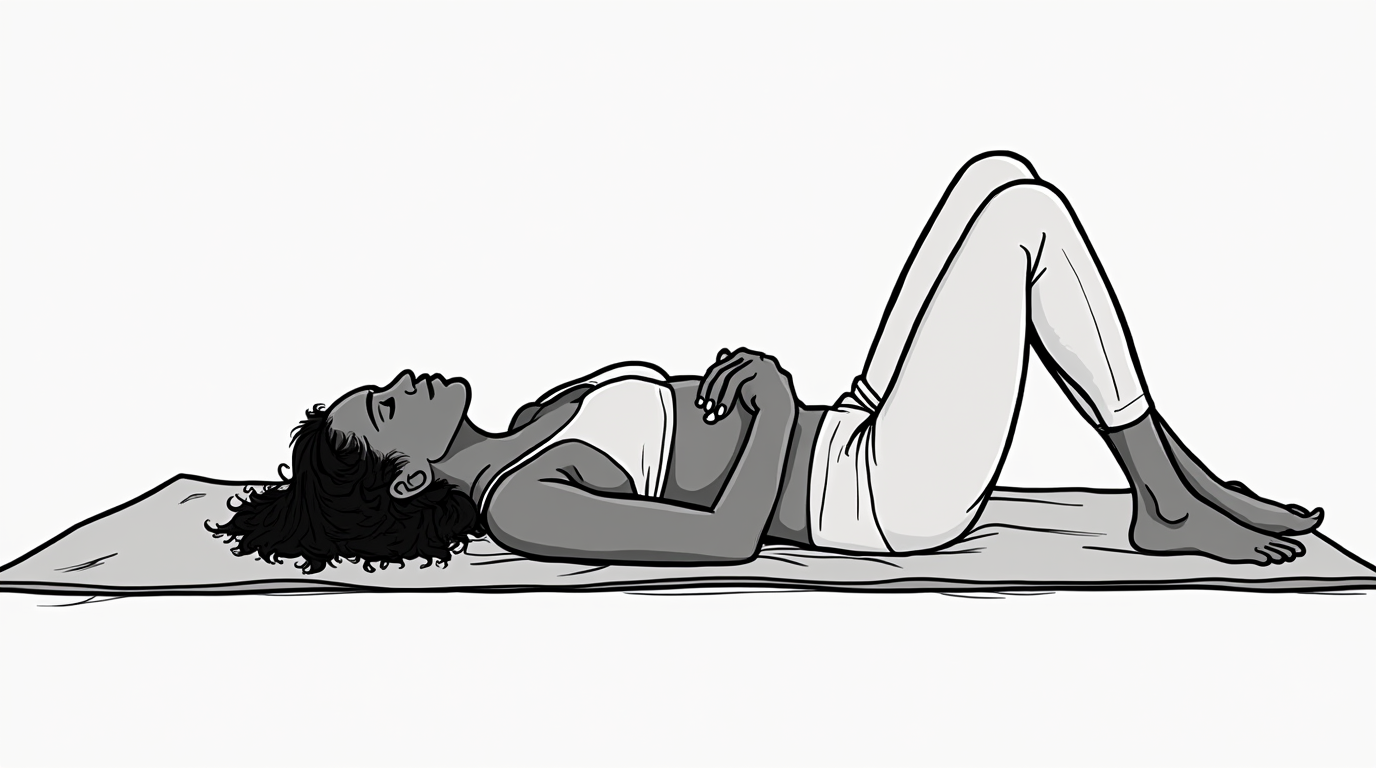
Layer 1 — Reconnection: Returning to the Body You Stopped Feeling
Reconnection is the layer that gets skipped most often, because it doesn't look like progress. There's no visible result. No metric improves. You can't post about it. And yet without this layer, every subsequent layer is hollow.
The goal of Layer 1 is restoring interoception — your ability to read the internal signals of your body. Hunger, fatigue, tension, breath, hot, cold, full, empty, anxious, calm. After a breakup, these signals get muddled. The work is regaining clarity on what your body is actually telling you, in real time.
The core Reconnection practices. These are not workouts. They're awareness practices. Run them daily during Layer 1.
Practice 1: The 3-Minute Body Scan. Three times a day, stop wherever you are. Close your eyes if appropriate or just soften your gaze. Slowly move your attention from the top of your head to your feet, noting what's present at each major area. Tense shoulders. Tight jaw. Cold hands. Dull lower back. You're not trying to change anything — you're noticing what's actually there. Three minutes, three times a day. The repetition builds back the awareness channel that's been muted.
Practice 2: The Hunger-Fullness Reread. Before each meal, pause and ask: how hungry am I, on a 1-10 scale, and where do I feel that? Mid-meal, pause and ask: how full am I now, where do I feel that, do I want to keep eating? After: how do I feel? This isn't dieting work. It's interoceptive recalibration. Many women find their hunger signals have become unreliable post-breakup; this practice rebuilds the signal pathway.
Practice 3: The Energy Audit. Three times a day, ask yourself: what's my energy right now, on a 1-10 scale, and what's the texture of it (jangly, heavy, alert, foggy, settled, restless)? Energy isn't just high or low — it has texture, and rebuilding the ability to read the texture is critical Layer 1 work. Most women find they'd been calling several different states the same name ("tired") because the texture awareness had collapsed.
Practice 4: The Breath Check. Five times a day, notice your breath without changing it. Where is it? Shallow chest, full belly, somewhere in between? Held, flowing, ragged? You're not aiming for ideal breathing. You're aiming for accurate awareness of your current breathing. This is one of the fastest interoceptive rebuilds because the breath is constant input data your awareness can re-tune to quickly.
Practice 5: The Touch Inventory. Once a day, run through what physical contact you've had today. Did you touch anything that felt good — warm water, soft fabric, a pet's fur? Did anything feel jarring — cold seat, scratchy collar, harsh fluorescent light? Most post-breakup women have lost track of how much pleasant or unpleasant tactile input they're getting. Restoring this inventory is part of rebuilding regulated touch into your day even when partnered touch is gone.
Practice 6: The Slow Shower. Once a day during your shower, slow down for 60 seconds and pay specific attention to the sensation of water on skin. Temperature. Pressure. Where it lands. The contrast where it ends. This sounds trivial. It's not — it's high-density interoceptive practice, free, daily, and specifically targets the touch hunger or touch aversion signature.
The Reconnection signal. You'll know Layer 1 is consolidating when you start having spontaneous moments of body awareness without prompting. Walking somewhere and suddenly noticing your shoulders are up by your ears. Eating and noticing you're full before the plate is finished. Feeling tired and being able to name whether it's physical or emotional. These are the signals that interoception is back online.
This usually takes 6-10 weeks of consistent practice. Some women report partial Layer 1 recovery in 4 weeks; others need 12+. The variable is consistency, not natural ability. Fifteen minutes a day of these practices, every day, produces the rebuild faster than 90 minutes once a week.
Common Layer 1 mistakes.
Mistake 1: Treating awareness practices as relaxation. They're not designed to relax you. They're designed to rebuild signal accuracy. Sometimes they'll make you more aware of unpleasant sensations, not less. That's the work.
Mistake 2: Adding cognitive layer. Most women try to interpret what they notice ("my shoulders are tight because I'm anxious about X"). Skip the interpretation in Layer 1. Just notice what's present. Interpretation comes later; awareness is the immediate work.
Mistake 3: Combining with workouts. Don't do Layer 1 work during workouts. The Reconnection practices need their own space. Mixing them with exercise produces neither — you get half-attention to body awareness and half-attention to physical training.
The writing prompts in Untangle Your Thoughts work well as the consolidation tool for Layer 1 — five minutes of writing about what you noticed in your body scan or hunger-fullness reread, daily, turns scattered awareness into integrated felt sense. Without the writing consolidation, many women report doing the practices for weeks without the benefits sticking.
Key Points
- Reconnection rebuilds interoception — the ability to read internal body signals accurately
- Six core practices: 3-minute body scan, hunger-fullness reread, energy audit, breath check, touch inventory, slow shower
- Layer 1 signal: spontaneous body awareness without prompting, naming sensation textures, distinguishing physical from emotional
- Consistency matters more than duration — 15 minutes daily beats 90 minutes weekly
- Three mistakes: treating practices as relaxation, adding cognitive interpretation, mixing with workouts
Practical Insights
- Run all six practices daily for 6-10 weeks before considering Layer 1 complete
- Don't interpret what you notice during practices — just track presence and texture
- Use Untangle Your Thoughts for daily consolidation reflection — that's what makes the practices stick
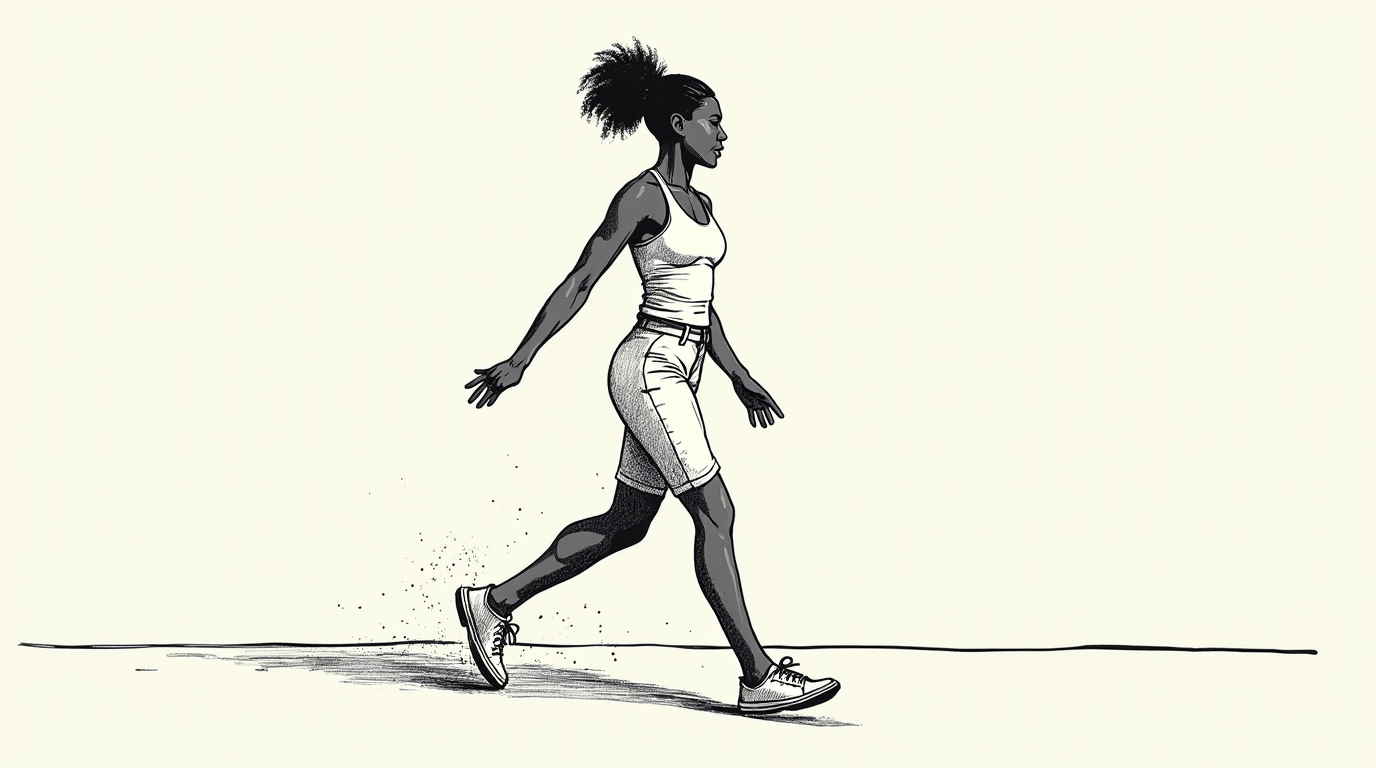
Layer 2 — Capability: Rebuilding the Body That Acts in the World
Once interoception is back online, the next layer is rebuilding functional capability — the felt sense that your body can do things. Not aesthetic outcomes. Functional ones. Carrying things. Walking distances. Climbing. Holding yourself up. Recovering from effort. The body's working knowledge that it's capable.
Capability work is movement work, but the framing matters. The goal isn't fitness in the cosmetic sense. The goal is restoring Capability Doubt's resolution — replacing "can my body do this" with "my body can do this." When that shift happens, physical confidence has its functional substrate.
The four pillars of Layer 2 movement.
Pillar 1: Walking practice. The most underrated capability work. Daily walks of progressively increasing duration — start at 15 minutes if your baseline is low, work up to 45-60 minutes. The aim is sustainable movement that produces mild effort, not exhaustion. Walking specifically rebuilds the felt sense of going somewhere using your body, which sounds obvious but is significant after Embodiment Disruption.
Pillar 2: Carry practice. Working with weight in the form of carrying — not lifting in a gym sense, but actual carrying that you'd do in life. Groceries up stairs. A heavy backpack on a walk. Sandbags or kettlebells in walks if you want structure. The aim is restoring the felt sense that your body can move loaded weight through the world. Many women report this pillar produces more confidence rebuild than any single other practice.
Pillar 3: Strength practice. Two or three short strength sessions per week, focused on movements that have functional carryover — squats, deadlifts, push-ups, rows, overhead presses. Heavy enough to be challenging, light enough to maintain form. The aim is functional strength that translates to daily life — not bodybuilder physique, but the felt sense that your body can produce force when it needs to.
Pillar 4: Mobility practice. Five to ten minutes daily of moving joints through their full range. Not stretching for flexibility specifically — moving through ranges of motion that often go unused. The aim is restoring the felt sense that your body has access to its full movement vocabulary, which in long relationships often gets compressed by routine and shared environments.
The progression rule. Layer 2 work progresses by capability, not by aesthetic outcome. The metric is what you can do, not how you look. Started not being able to walk 30 minutes? Now you can. Couldn't carry groceries up two flights without resting? Now you can. Couldn't do a single push-up? Now you can do five. These are the markers, and they're far more reliable signals of physical confidence rebuild than any scale or measurement.
The progression is gradual. Most women see significant Layer 2 capability shifts in 8-12 weeks of consistent practice. Push too hard and you produce injury or burnout, both of which set the rebuild back. Push too gently and you don't produce capability shift, which means Capability Doubt remains active.
The recovery principle. This is the part most aesthetic-focused fitness advice misses. Capability isn't built through effort alone — it's built through the cycle of effort and recovery. Adequate sleep, nutrition, and rest days are part of the protocol, not afterthoughts. Layer 2 work without recovery doesn't build capability; it depletes it.
During Layer 2, sleep should be protected. Nutrition should be sufficient — not optimized for weight loss, sufficient for the demands of the work you're doing. Rest days are mandatory. The week structure that works for most women: 5 days of walking, 3 strength sessions, 5 mobility practices, 2 dedicated rest days where movement is light only.
The Layer 2 signal. You'll know Capability is rebuilding when daily physical demands stop registering as imposing. Stairs feel like stairs. Carrying things feels normal. Long walks become enjoyable rather than feared. You catch yourself moving without managing the movement. Most importantly, the Capability Doubt signature fades — your body's working knowledge of itself returns.
This usually takes 12-20 weeks of consistent practice. The variable here, more than in Layer 1, is genuinely physical — recovery from any pre-existing fitness gap, current age, any injuries to work around. The protocol still works at all starting points; the timeline adjusts.
Common Layer 2 mistakes.
Mistake 1: Optimizing for aesthetic outcome. Aesthetic-driven Layer 2 work prioritizes calorie burn, scale weight, or visual change. This shifts the work away from capability and back into the trap that produced the aesthetic-functional gap in the first place.
Mistake 2: Pushing through pain or warning signs. Layer 1 should have rebuilt the awareness to detect pain vs. effort. If you've been doing Layer 1, you can read the signals. Pushing through pain in Layer 2 produces injury that sets the rebuild back months.
Mistake 3: Skipping recovery. Effort without recovery doesn't build capability. Many women try to compress Layer 2 by training every day; this produces depleted, injured, demoralized states that look like "failed willpower" but are actually structural.
Mistake 4: Returning to relationship-era movement patterns. If you used to do all your physical activity with your ex, returning to those patterns alone often produces grief instead of capability. Build new movement patterns specific to your current solo life — different routes, different times, different formats.
The reflection prompts in Untangle Your Thoughts work well at this layer for tracking capability shifts that aren't visually obvious — the felt-sense changes that constitute the actual rebuild.
Key Points
- Capability work is movement work but oriented to functional rebuild, not aesthetic outcome
- Four pillars: walking, carry, strength, mobility — each addressing a specific functional dimension
- Progression by what you can do, not how you look — capability metrics are more reliable than aesthetic ones
- Recovery is part of the protocol, not afterthought: 5 walks, 3 strength sessions, 5 mobility, 2 rest days as default week
- Four mistakes: optimizing for aesthetic, pushing through pain, skipping recovery, returning to relationship-era movement patterns
Practical Insights
- Track capability metrics weekly: walk duration, carrying capacity, strength reps, range of motion improvements
- Build new movement patterns specific to solo life — don't return to relationship-era patterns and expect different results
- Use Untangle Your Thoughts to track felt-sense capability shifts that aren't visually obvious
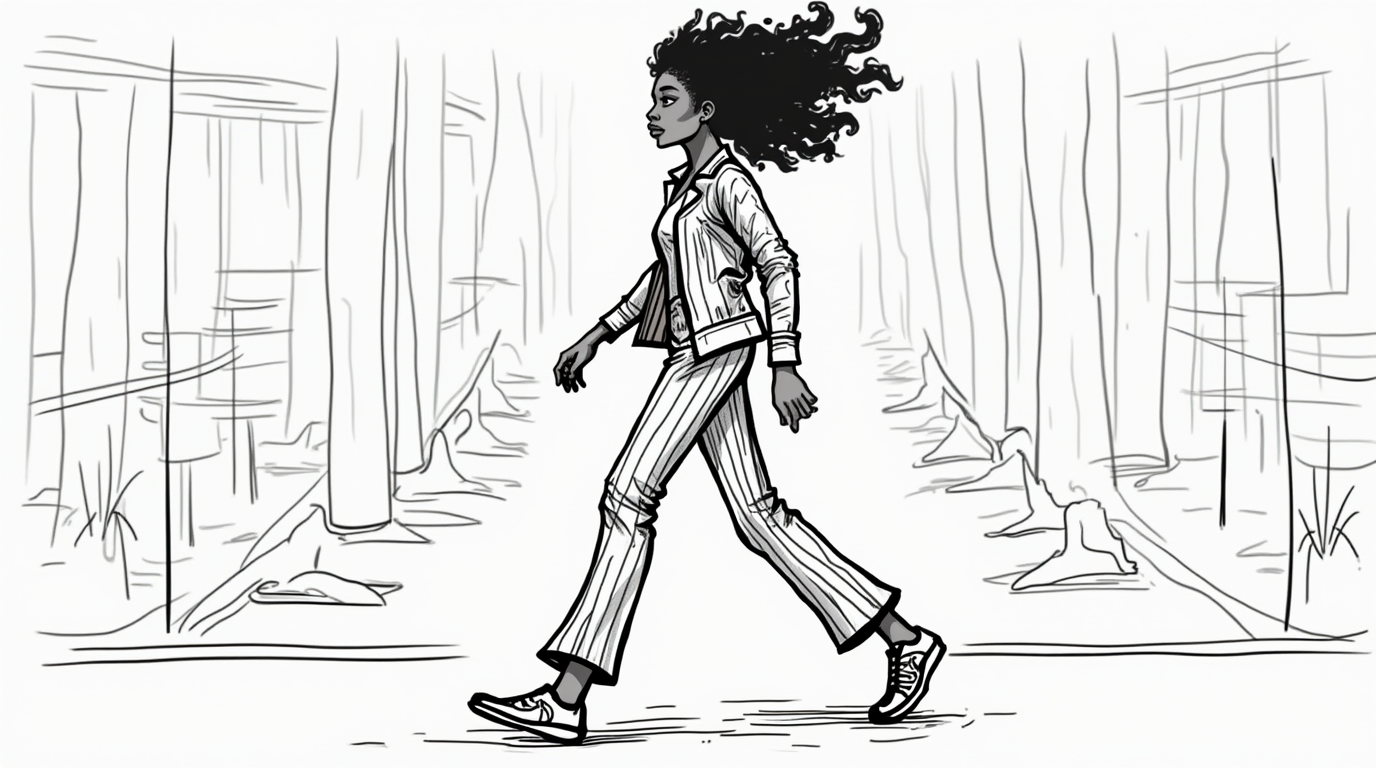
Layers 3-4 — Expression and Integration: When Embodiment Becomes Your Default
By Layer 3, the foundation is built. Interoception is back online (Layer 1). Functional capability is rebuilt (Layer 2). The Embodiment Disruption signatures have faded. What remains is making the rebuilt embodiment legible — to yourself and to others — through how you carry your physical self in the world.
Layer 3: Expression. This is where physical confidence becomes externally visible without requiring performance. The work is articulation — letting the body you've rebuilt communicate who you've become.
Practice 1: Posture audit and refinement. Once daily, in front of a mirror or window, check your posture. Not military posture — your natural upright. Shoulders down, neck long, weight even. Notice when your posture has compressed during the day and reset it. Over weeks, the resets become unnecessary because the posture has become the new neutral.
Practice 2: Spatial claiming. Practice taking up appropriate space in public. On public transit, claim the seat space you're entitled to without sprawling. In line, stand at appropriate distance from others, not pressed against them. In meetings, occupy your chair fully rather than perched at the edge. Most post-breakup women report that they'd been physically shrinking themselves; this practice builds the felt sense that the space is theirs to take.
Practice 3: Walking presence. Pay attention to how you walk through public spaces. Pace, head position, gaze direction. The shift from looking-down walking to looking-around walking changes the felt sense substantially. The aim isn't to look confident; it's to walk in ways that match the rebuilt internal state.
Practice 4: Voice grounding. Notice your voice. Has it gotten higher post-breakup? Smaller? More tentative? Practice speaking in your natural register — slow enough to be heard, low enough to feel grounded, loud enough to take up the auditory space you're entitled to. Voice is part of physical expression that often gets overlooked.
Practice 5: Touch initiation. Begin re-introducing initiated physical contact at appropriate scale. Hugging friends fully when you greet them, shaking hands with intention, sitting close enough to people you trust to feel proximity. This practice resolves the Touch Hunger or Aversion signature while staying within socially appropriate bounds.
Practice 6: Body-led decisions. Some decisions throughout the day, let your body lead. What do you actually want for lunch (interoception data plus capability state)? Do you want to take the longer scenic route home or the shorter direct one (energy data)? Should you say yes or no to this invitation (somatic check)? You're integrating Layer 1-2 data into actual life choices.
Layer 3 signal. You catch yourself moving through the world differently without management. People treat you slightly differently — strangers make eye contact more, conversations flow more easily, you take up more appropriate space without working at it. Photos of you taken by others look different, in ways you can sometimes hardly name. This is rebuilt embodiment becoming externally visible, which usually takes 8-12 weeks of Layer 3 practice on top of Layer 1-2 work.
Layer 4: Integration. This is the final layer, and it's not a layer you complete in the same sense. It's the steady state where rebuilt embodiment has become your default. Integration is when you no longer have to think about taking up space, you take up space. You no longer remind yourself to feel your body, you feel your body. The rebuild has become the new baseline.
Integration markers. You'll know Layer 4 is established when:
- Physical confidence is no longer something you work on; it's something you have. - New stressors in life don't immediately collapse your physical confidence the way the breakup did. - You move through romantic, professional, and social situations in your body without needing to perform a confident version. - You can be photographed without flinching from the image. - You can be touched (by close friends, by partners if you're in a new relationship, by family) without the touch destabilizing you. - You can say no with your body, not just your words.
Why Integration is fragile in early stages. Even after months of protocol work, certain events can produce temporary regressions. Seeing your ex with someone new. Receiving difficult news. Major life transitions. Holiday seasons. The Integration layer becomes robust over time as the rebuilt embodiment survives these tests and re-stabilizes after temporary disruption.
The deepest function of the protocol. Most women, by the time they've worked through all four layers, report something that surprises them: they feel more at home in their body than they did before the relationship. This isn't because the breakup was somehow good — it's because most long relationships involve some degree of Embodiment Compromise that the protocol's work surfaces and addresses. The rebuild isn't a return to baseline; it's an upgrade because you've now consciously developed embodiment that previously was inherited and never examined.
This is the version of physical confidence that doesn't depend on appearance, partner attention, or external validation. It's structural. It's yours. It travels with you into new relationships without requiring those relationships to maintain it.
The role of ongoing reflection. The rebuilt embodiment becomes more stable when ongoing reflection consolidates the daily experience into integrated knowing. Body-led decisions need to be processed in writing periodically — what did you notice your body wanted, what happened when you listened, what happened when you didn't. This consolidation is what turns Integration into something durable.
The reflection structure in Untangle Your Thoughts supports Integration specifically because the reflection prompts include body-aware questions that integrate physical experience with emotional and decision-making content. Embodiment that gets reflected into integrated knowledge consolidates faster than embodiment held only as physical experience.
Key Points
- Layer 3 is articulation: posture, spatial claiming, walking presence, voice, touch initiation, body-led decisions
- Layer 3 signal: people treat you differently, photos look different, you move without management
- Layer 4 isn't completed — it's the steady state where rebuilt embodiment has become default
- Integration markers: physical confidence held even in stress, no need to perform confidence, can be touched/photographed without destabilization
- Most women report better embodiment post-protocol than pre-relationship — the rebuild is an upgrade, not a return
Practical Insights
- Run all six Layer 3 practices daily for 8-12 weeks on top of completed Layer 1-2 work
- Watch for temporary regressions in Layer 4 — they're normal and the embodiment re-stabilizes
- Use Untangle Your Thoughts to consolidate body-led decision experience into durable integrated knowing
Frequently Asked Questions
How do I get my physical confidence back after a breakup?
Physical confidence after a breakup is felt-sense agency — your embodied capacity to inhabit and act through your body — and it's rebuilt through specific structural work, not aesthetic transformation. The Embodiment Rebuild Protocol moves through four layers: Reconnection (rebuilding interoception), Capability (rebuilding functional movement), Expression (developing physical articulation), and Integration (consolidating into daily life). Aesthetic work alone doesn't restore physical confidence because the issue isn't appearance; it's the disconnection between self and physical experience that the breakup exposed.
Why don't I feel at home in my body after my breakup?
Long relationships shape your physical experience in ways most people don't consciously notice — through co-sleeping, regular touch, shared spatial habits, and nervous-system co-regulation. When the relationship ends, this scaffolding disappears, producing what's called Embodiment Disruption with four signatures: felt-sense fog (muddled body signals), spatial uncertainty (changed sense of taking up space), touch hunger or aversion (regulated-touch deficit), and capability doubt (questioning your body's reliability). These resolve through layered structural work, not through fitness or aesthetic change alone.
Will working out fix my post-breakup physical confidence issues?
Working out alone usually doesn't restore post-breakup physical confidence because it doesn't address the underlying Embodiment Disruption. Many women complete aesthetic transformations and report no improvement in feeling at home in their bodies. Functional capability work (Layer 2) does help, but only after Layer 1 reconnection rebuilds interoception, and only when oriented toward what your body can do rather than how it looks. The Aesthetic-Functional Gap is the gap most fitness advice ignores.
How long does it take to rebuild physical confidence after a breakup?
The full Embodiment Rebuild Protocol typically runs 9-12 months: Layer 1 (Reconnection) in months 1-3, Layer 2 (Capability) in months 3-6, Layer 3 (Expression) in months 6-9, Layer 4 (Integration) from month 12 onward. The variable is consistency, not natural ability. Skipping layers compresses the timeline on paper but produces gaps that surface as plateaus or backslides. Layered work in order is what produces durable rebuild.
Why does my body feel different after my breakup even though I didn't change physically?
Your body didn't change much, but your felt sense of inhabiting it did. The relational scaffolding that anchored your sense of being at home in your body — partner's touch, shared sleeping arrangements, daily small physical exchanges — disappeared with the breakup. The body feels different because your interoceptive accuracy temporarily reduced, your spatial calibration changed, and your nervous system stopped co-regulating through someone else's presence. This is Embodiment Disruption, and it's predictable and rebuildable.
Should I focus on losing weight to rebuild my confidence after a breakup?
Weight-focused work usually fails to address the actual problem. Physical confidence after a breakup runs on functional embodiment — the felt sense of being able to act through your body — not on weight or appearance. Many women who lose substantial weight post-breakup report no improvement in feeling at home in their bodies. The Embodiment Rebuild Protocol's Layer 2 work involves movement and capability development that may produce aesthetic changes as a side effect, but the goal is restoring agency, not achieving a number on a scale.
What if I had body image issues before my breakup too?
Pre-existing body image issues often get amplified by Embodiment Disruption, but they're separate problems with separate solutions. The protocol addresses Embodiment Disruption specifically — restoring felt-sense agency. Long-standing body image work may also be appropriate, but it's a different kind of work, often requiring professional support. The protocol doesn't claim to resolve pre-existing body image issues; it claims to resolve the post-breakup disruption layered on top of them.
Will I feel more confident in my body when I start dating again?
Confidence built through new partner attention is fragile — it depends on the new person staying interested. Confidence built through embodiment rebuild is structural — it doesn't depend on external validation. The protocol produces the second kind. Most women find that completing the layered work makes dating substantially easier because they enter it with physical confidence that doesn't need maintaining by the new person. This is what allows you to evaluate new people honestly rather than chasing whoever validates the body you don't yet feel at home in.
Conclusion
Physical confidence after a breakup isn't an aesthetic problem and it doesn't get solved by aesthetic work. It's an embodiment problem — the disruption of the felt-sense agency that connects your sense of self to your physical experience. Aesthetic transformation without embodiment rebuild produces thinner women who still don't feel at home in their bodies. The Embodiment Rebuild Protocol addresses the actual mechanism through four sequential layers: Reconnection, Capability, Expression, Integration.The single biggest shift is this: stop working on how your body looks and start working on how your body feels and acts. The four signatures of Embodiment Disruption — felt-sense fog, spatial uncertainty, touch hunger or aversion, and capability doubt — each have specific layered work that addresses them. Skip the layers and the work doesn't hold; do them in order and the rebuild produces physical confidence that doesn't depend on appearance, validation, or partnership to maintain.Start with one layer. If you don't currently feel reliable signals from your body — hunger, fatigue, fullness, energy — you're at Layer 1 and the awareness practices come first. If you can feel your body but doubt what it can do, you're at Layer 2 and capability work follows. If you've completed Layer 1-2, Layer 3 expression work makes the rebuild externally visible. The framework gets clearer as you move through it. By 9-12 months of consistent protocol work, most women report physical confidence that exceeds anything they had before the breakup — because they've now built it consciously instead of inheriting it.