Learning to Enjoy Life Solo After a Breakup: From Tolerating It to Liking It
Introduction
The first time you do something on your own after a breakup — a meal out, a movie, a trip — it can feel weirdly exposing, like everyone can tell you're alone. So you avoid it, which leaves your enjoyment of life dependent on having company, which is a fragile place to be.Enjoying your own company is a capacity you can build, not a personality trait you either have or don't.
Quick Answer: Doing things solo feels uncomfortable at first largely because you're used to company and braced for others' judgment — but that discomfort fades with practice, and on the other side is genuine enjoyment of your own company. I call the thing you're building Solo Capacity, and it grows in steps:
1. Understand the early discomfort — it's habit and the spotlight effect, not a real problem
2. Build it gradually — start with low-exposure solo activities and work up
3. Reach genuine enjoyment — where solo isn't a fallback but a real pleasure
The payoff is a life you enjoy whether or not anyone's available — which, not incidentally, makes you less dependent on a relationship to feel good.
Why Doing Things Alone Feels Uncomfortable at First
The discomfort of solo activities right after a breakup comes from two things, and neither is a real problem with being alone.
The first is simple habit. You were used to a built-in companion, so doing things solo feels like something's missing — because something familiar is. That's an adjustment, not a verdict; the absence feels loud precisely because the presence used to be constant.
The second is the spotlight effect — the tendency to overestimate how much others notice you. Eating alone, you feel conspicuous, sure everyone clocks that you have no company. In reality, almost no one is paying attention; they're absorbed in their own lives. The audience you're performing for is mostly imaginary, the same dynamic that makes solo events feel exposing.
Both fade with exposure. The first few solo outings carry the discomfort; by the third or fourth, the habit recalibrates and the imagined spotlight dims. Knowing the discomfort is temporary and largely imagined keeps you from reading it as proof that you're meant to do things only with company.
Key Insights: - Solo discomfort comes from habit and the spotlight effect, not a real problem with being alone - The absence of a companion feels loud because the presence used to be constant - The spotlight effect makes you overestimate how much others notice you alone - Both fade with a few exposures, recalibrating the habit and dimming the imagined audience
Put It Into Practice: - Name the discomfort as habit plus the spotlight effect, not evidence you need company - Remind yourself almost no one is actually watching you do things alone - Expect the first few solo outings to be the hardest, then easier
Key Points
- Solo discomfort is habit plus the spotlight effect
- Absence feels loud because the presence was constant
- The spotlight effect overestimates others' attention
- Both fade after a few exposures
Practical Insights
- Name the discomfort as habit and spotlight effect
- Remind yourself no one is really watching
- Expect the first outings to be hardest

Building Solo Capacity Gradually
Solo capacity builds like any tolerance — start below your discomfort threshold and work up, rather than forcing a big leap that backfires.
Start with low-exposure solo activities. The easiest solo outings have a built-in focus and little sense of being watched: a walk, a museum or gallery, a bookshop, a movie (dark, no one looking), a solo coffee with a book. The activity gives your attention somewhere to go, which quiets the self-consciousness. These are the on-ramp.
Work up to higher-exposure ones. Once the low-exposure outings feel fine, step up to the ones that feel more conspicuous — a sit-down meal alone, an event, eventually a solo trip. Each one you complete proves the discomfort is survivable and shrinking, and the proof is what builds the capacity. A solo dinner that felt impossible becomes ordinary once you've done a few easier outings first.
Bring a light prop early if it helps, then drop it. A book or a phone gives you something to do in the exposed moments and lowers the entry difficulty — that's fine as training wheels. As capacity grows, you'll need the prop less and be able to just be there. Track which outings you've done and how they felt in Untangle Your Thoughts; the log shows the discomfort shrinking, which reinforces continuing.
Key Insights: - Solo capacity builds like a tolerance — start below the discomfort threshold and work up - Low-exposure outings (walk, museum, movie, bookshop) have built-in focus and little watching - Completing higher-exposure outings proves the discomfort is survivable and shrinking - A light prop (book, phone) is fine as early training wheels, then drop it
Put It Into Practice: - Begin with low-exposure solo outings that have a built-in focus - Step up to more conspicuous ones only once the easy ones feel fine - Use a book or phone as early support, and rely on it less as capacity grows
Key Points
- Solo capacity builds like a tolerance, gradually
- Low-exposure outings have built-in focus, little watching
- Higher-exposure outings prove the discomfort is shrinking
- A light prop is fine as early training wheels
Practical Insights
- Begin with low-exposure outings
- Step up only once easy ones feel fine
- Use a prop early, then drop it

From Tolerating It to Genuinely Liking It
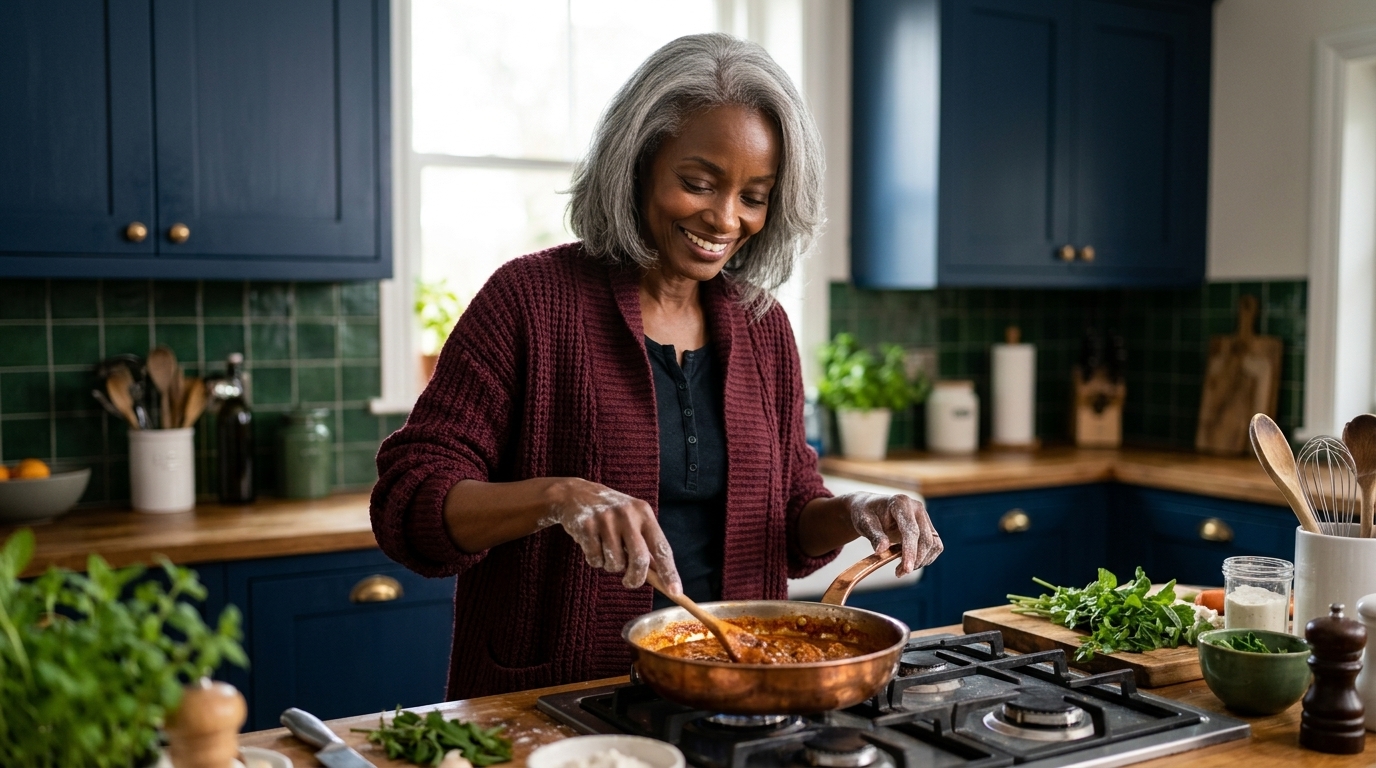
The goal isn't just to tolerate being alone — it's to reach the point where solo time is a genuine pleasure, not a consolation prize.
Notice the freedoms solitude actually offers. Solo, you set the entire agenda: the pace, the choices, the lingering or leaving, with no one to accommodate. Most people, once past the discomfort, find there are things they prefer to do alone — moving at their own speed, following their own curiosity. Naming those freedoms shifts solo from "what I do when no one's free" to "what I sometimes actively choose."
Let enjoyment replace endurance. Somewhere in the practice, a solo outing stops being something you're getting through and becomes something you're savoring — a meal you're genuinely tasting, a walk you're actually present for. That shift is the capacity arriving. It tends to happen on its own once the discomfort clears, but you can help it by choosing solo activities you'd love regardless of company.
Keep it as a permanent asset. Solo capacity isn't just for the single stretch — it's a durable life skill. It makes you less dependent on others' availability for your enjoyment, steadier in future relationships (you bring a full life rather than a need to be entertained), and harder to destabilize the next time you're on your own. This is the lived-experience half of Being Unapologetically Single and pairs with the restorative side of Embrace Solitude After a Breakup.
Key Insights: - The goal is genuine enjoyment of solo time, not just tolerating it - Solo time offers real freedoms — full control of pace, choices, and agenda - Enjoyment replaces endurance once the discomfort clears, especially with activities you'd love anyway - Solo capacity is a durable asset: less dependence, steadier in future relationships
Put It Into Practice: - Name the specific freedoms you get doing something solo versus with company - Choose solo activities you'd genuinely enjoy regardless of company - Treat solo capacity as a permanent skill to keep, not just a single-life patch
Key Points
- The goal is genuine enjoyment, not just tolerance
- Solo time offers real freedoms of pace and choice
- Enjoyment replaces endurance once discomfort clears
- Solo capacity is a durable, portable asset
Practical Insights
- Name the freedoms solo time gives you
- Choose solo activities you'd love anyway
- Keep solo capacity as a permanent skill
Frequently Asked Questions
Why does doing things alone feel so uncomfortable after a breakup?
Two reasons, neither a real problem with being alone: habit (you were used to a built-in companion, so solo feels like something's missing) and the spotlight effect (you overestimate how much others notice you're alone, when almost no one is actually paying attention). Both fade after a few solo outings as the habit recalibrates and the imagined audience dims.
How do I get comfortable being alone?
Build it gradually like a tolerance. Start with low-exposure solo activities that have a built-in focus — a walk, a museum, a movie, a bookshop, a coffee with a book — then work up to more conspicuous ones like a sit-down meal alone or a solo trip. Each completed outing proves the discomfort is survivable and shrinking, which is what builds the capacity. A light prop like a book is fine as early training wheels.
Will I ever actually enjoy being alone, or just tolerate it?
Genuine enjoyment is reachable, and it usually arrives on its own once the early discomfort clears. Somewhere in the practice a solo outing stops being something you're getting through and becomes something you're savoring. You can speed it by choosing solo activities you'd love regardless of company and by noticing the real freedoms solitude offers — full control of your pace, choices, and agenda.
What are good things to do alone after a breakup?
Start with low-exposure options: a walk, a museum or gallery, a bookshop, a movie (dark, no one watching), or a solo coffee with a book. As your comfort grows, add higher-exposure ones like a sit-down meal alone, an event, or eventually a solo trip. The best solo activities have a built-in focus that gives your attention somewhere to go, which quiets self-consciousness.
Is being able to enjoy alone time actually important?
Yes — it's a durable life asset, not just a single-life patch. Enjoying your own company means your enjoyment of life isn't dependent on others' availability, which is a fragile place to be otherwise. It also makes you steadier in future relationships, since you bring a full life rather than a need to be entertained, and it makes you harder to destabilize the next time you're on your own.
Conclusion
Doing things alone feels exposing at first because of habit and the spotlight effect, not because you're meant to do everything with company — and both fade with practice. Build Solo Capacity gradually, from low-exposure outings up to the conspicuous ones, and the experience shifts from something you endure to something you genuinely enjoy. The payoff outlasts the single stretch: a life you like regardless of who's available, and a steadier self to bring into whatever comes next.This is the lived practice behind Being Unapologetically Single; pair it with the restorative side in Embrace Solitude After a Breakup and the exposure work in Navigating Parties and Gatherings Alone, and track your outings in Untangle Your Thoughts.