Creative Healing After a Breakup: Processing Through Art, Movement, and Making
Introduction
You've journaled about the breakup, talked about it, analyzed it — and some knot of it still sits there, untouched by words. That's not a failure of insight. Some of what a breakup leaves is stored below language, and you can't always write your way to it.Creative expression reaches that layer. Making something — visual, physical, musical — processes feeling in a way that talking and writing sometimes can't.
Quick Answer: A breakup leaves emotion stored partly below words, in the body and in pre-verbal feeling that talking and journaling don't fully reach. Creative expression — art, movement, music, making — processes that layer directly. It works through three things:
1. Externalizing the wordless — giving shape to feeling you can't articulate
2. Engaging the body — movement and making discharge what sits physically
3. Restoring agency and flow — making something is the opposite of helplessness
None of it requires talent. The point is the process, not the product.

Why Creative Expression Reaches What Words Can't
Talking and writing are powerful, but they work in language, and not all of a breakup's residue is verbal. Some of it is stored as bodily tension, as imagery, as a mood with no clear words — the kind of feeling you gesture at and can't quite name. When you try to write about that part, you circle it without landing.
Creative expression gives the wordless feeling a form. A painting doesn't have to explain the grief; it can just be the grief, externalized into color and shape. Movement can express what a sentence can't. Music can carry a mood directly. Putting the feeling into a non-verbal medium gets it out of you and into something you can see or hear, which is its own relief — the same externalizing logic as journaling, but reaching a different layer than the Thought Externalization System does.
There's also a body dimension. A breakup lives partly in the body, and making and moving engage the body in a way sitting and thinking don't. That overlaps with the body-led release work in Somatic Emotional Release. Creative healing isn't a lesser, artsy alternative to "real" processing — it reaches material the verbal tools leave behind.
Key Insights: - Not all of a breakup's residue is verbal; some is bodily, imagistic, or pre-verbal - Words circle wordless feeling without landing on it - Creative media give the wordless feeling a form you can externalize and release - Making and moving engage the body, where verbal processing doesn't reach
Put It Into Practice: - Notice the knot that talking and writing haven't touched - Let a creative medium hold the feeling without explaining it - Treat creative healing as reaching a different layer, not a lesser one
Key Points
- Some breakup residue is below words
- Words circle wordless feeling without landing
- Creative media externalize the wordless directly
- Making and moving engage the body verbal tools miss
Practical Insights
- Notice the knot words haven't touched
- Let a medium hold feeling without explaining it
- Treat it as a different layer, not a lesser one
The Modes: Find What Fits You
Different mediums suit different people and different feelings. You don't need all of them — find the one that lets you express without thinking too hard.
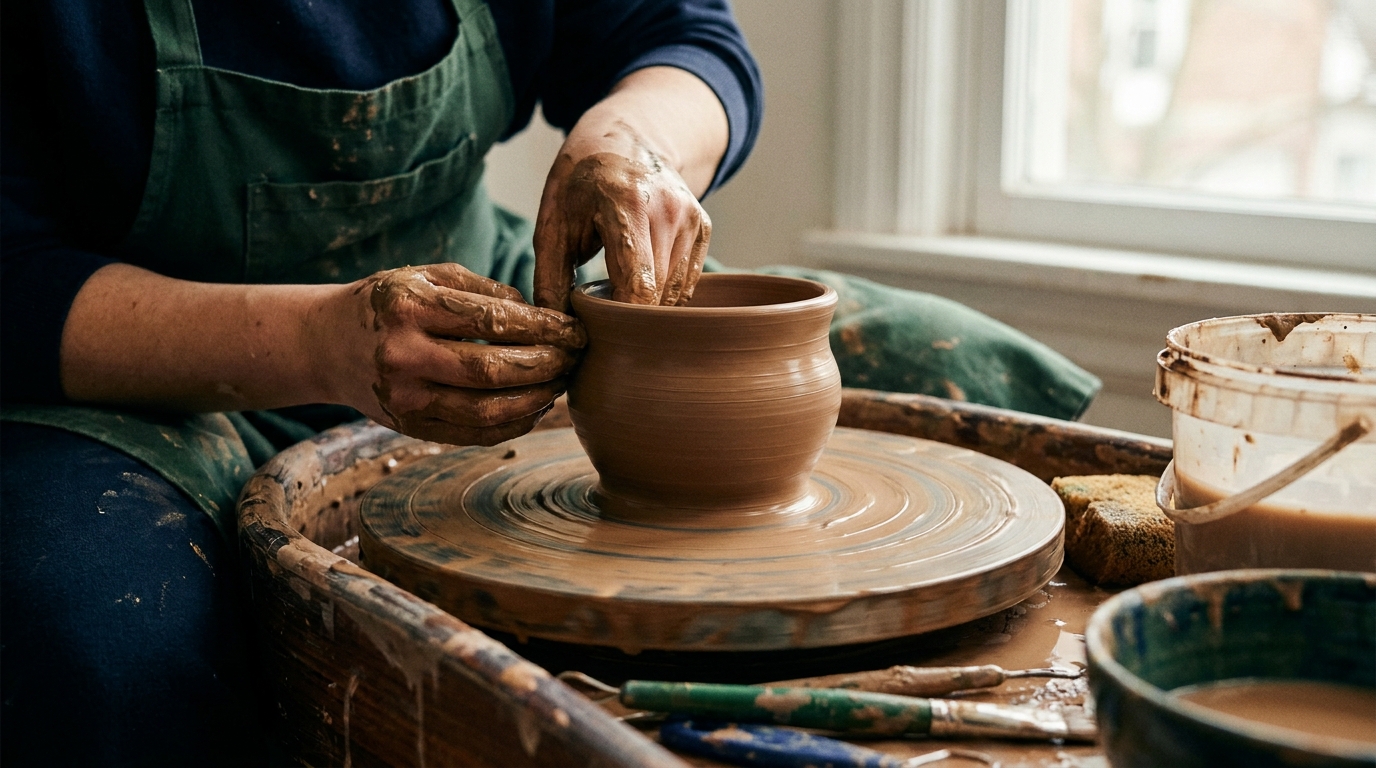
Visual making — painting, drawing, collage, clay — is good for moods and images that resist words. You're not illustrating the breakup; you're letting color, mark, and texture carry the feeling. Abstract is fine; nobody has to see it.
Movement — dancing alone, free movement, even vigorous physical work — is good for what sits in the body: restlessness, anger, agitation. Moving the feeling literally moves it through you, discharging activation that talking leaves stuck.
Music and sound — playing an instrument, singing, building a playlist that maps your states — carries mood directly and can express intensity that words flatten. (Pairs with how music aids recovery in your sonic-recovery work.)
Making and craft — cooking, building, gardening, repairing — channels feeling into a tangible, completed thing, which adds a sense of order and accomplishment to the processing. Pick by feeling: when the feeling is imagistic, make something visual; when it's physical, move; when it's a mood, use sound; when you crave order, build.
Key Insights: - Different mediums suit different people and different feelings - Visual making holds moods and images that resist words - Movement discharges what sits physically — restlessness, anger, agitation - Music carries mood directly; making and craft add order and accomplishment
Put It Into Practice: - Match the medium to the feeling: visual for images, movement for the body, sound for mood - Pick the one that lets you express without overthinking, and start there - Let it be abstract or private — you're not making it for anyone to see
Key Points
- Different mediums suit different people and feelings
- Visual making holds wordless moods and images
- Movement discharges physical activation
- Music carries mood; craft adds order
Practical Insights
- Match medium to feeling
- Pick the one that bypasses overthinking
- Let it be abstract or private

Do It Without Pressure or Perfectionism
The one thing that kills creative healing is treating it as performance. The benefit is in the doing, and judging the output destroys the process.
Detach from talent and product. You're not trying to make good art — you're using a medium to process feeling, and an ugly painting that moved something is a complete success. The moment you start evaluating the result, you've left the processing and entered self-criticism. Keep it private and unjudged.
Follow the impulse, not a plan. Creative healing works best unstructured: start without knowing what you'll make, and let the feeling steer. Over-planning turns it into a task; following the impulse keeps it expressive. If you don't know where to start, start with the color, movement, or sound that matches your current mood and see where it goes.
Use it as one tool among several. Creative expression reaches what words can't, but it's a complement to the verbal and cognitive work, not a replacement — the fullest processing uses both. And if making consistently leaves you more agitated rather than lighter, ease off and lean on other tools. Notice which mediums and sessions actually shift something in Untangle Your Thoughts.
Key Insights: - Treating creative healing as performance kills its benefit - An ugly result that moved something is a complete success - It works best unstructured — follow the impulse, not a plan - It complements verbal processing rather than replacing it
Put It Into Practice: - Keep it private and unjudged; you're processing, not performing - Start without a plan and let the feeling steer - Use it alongside talking and writing, and ease off if it agitates rather than helps
Key Points
- Performance framing kills the benefit
- An ugly result that moved something succeeds
- It works best unstructured, following the impulse
- It complements verbal processing, not replaces it
Practical Insights
- Keep it private and unjudged
- Start without a plan and let feeling steer
- Use it alongside talking and writing
Frequently Asked Questions
How does creative expression help you heal after a breakup?
It reaches emotional residue that's stored below language — bodily tension, imagery, moods you can't quite name — which talking and journaling circle without landing on. A creative medium gives that wordless feeling a form: a painting can be the grief without explaining it, movement can express what a sentence can't, music carries mood directly. It also engages the body and restores a sense of agency, both of which verbal processing leaves untouched.
Do I need to be artistic or talented for creative healing?
No — talent is irrelevant and focusing on it actually undermines the process. You're not making good art; you're using a medium to process feeling, so an ugly painting that moved something is a complete success. The moment you start evaluating the result, you've left the processing and entered self-criticism. Keep it private and unjudged, and the lack of skill stops mattering.
What kinds of creative activities help with a breakup?
Match the medium to the feeling. Visual making (painting, drawing, collage, clay) suits moods and images that resist words; movement (dancing alone, free movement, physical work) discharges what sits in the body like restlessness or anger; music and sound carry mood directly; and making or craft (cooking, building, gardening) channels feeling into a tangible, completed thing that adds a sense of order. Pick whichever lets you express without overthinking.
Is creative healing a replacement for therapy or journaling?
No — it's a complement, not a replacement. Creative expression reaches a layer that verbal tools leave behind, but the fullest processing uses both the creative and the verbal/cognitive work together. It's also not a substitute for professional support when that's needed. If making consistently leaves you more agitated rather than lighter, ease off and lean on other tools.
How do I start if I don't know what to make?
Start with the color, movement, or sound that matches your current mood and let it go from there, without a plan. Creative healing works best unstructured — you begin not knowing what you'll make and let the feeling steer, because over-planning turns it into a task. The goal is to follow the impulse, not to execute an idea, so the not-knowing is actually the right starting point.
Conclusion
Some of what a breakup leaves behind lives below words, and no amount of talking or journaling fully reaches it. Creative healing — art, movement, music, making — processes that layer directly, by giving wordless feeling a form, engaging the body, and restoring a sense of agency. Match the medium to the feeling, follow the impulse rather than a plan, and keep it private and unjudged, because the benefit is in the doing, not the product.It complements the verbal tools in Journaling After a Breakup and Therapeutic Writing, overlaps the body work in Somatic Emotional Release, and is worth tracking in Untangle Your Thoughts.