Breaking Unhealthy Relationship Patterns: The Loop You Keep Repeating
Introduction
At some point after a few breakups, a suspicion creeps in: the relationships ended differently, but they rhymed. Same dynamic, same role you played, same way it fell apart — just a different person. That repetition is real, and it's not bad luck or a flaw in you.Patterns repeat because they're familiar, and familiar feels like home even when home wasn't good. Breaking the loop means making the pattern conscious enough to interrupt.
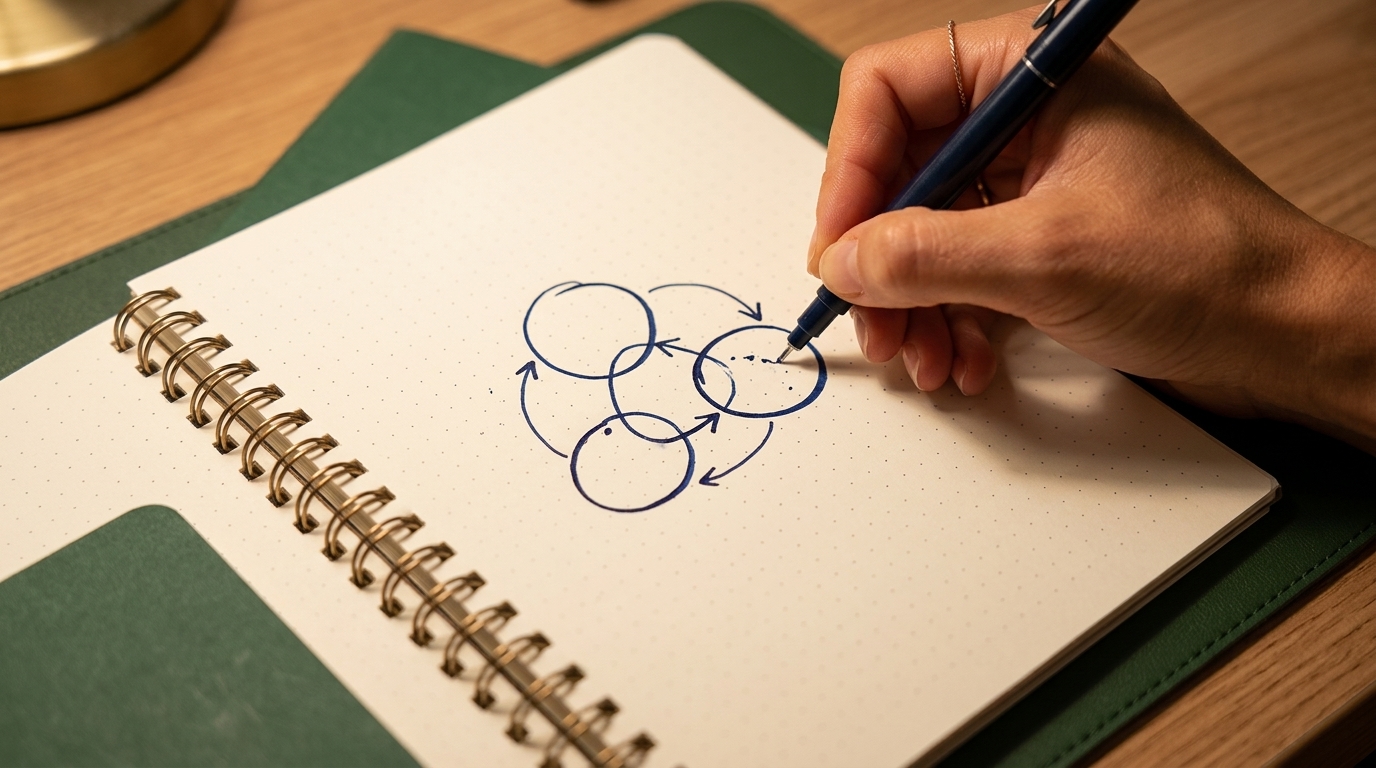
Quick Answer: Unhealthy relationship patterns repeat because the familiar is what your system is drawn to — even when it hurts — and because the pattern runs automatically below awareness. I call it the Pattern Loop, and breaking it takes three steps:
1. See why you repeat — familiarity, not fate, drives the loop
2. Map your specific loop — the exact recurring dynamic and your role in it
3. Interrupt and replace — catch it in real time and choose a different move
You don't break a pattern by trying harder to pick better people. You break it by making the loop visible and disrupting it where it runs.

Why You Keep Repeating the Same Pattern
The reason patterns repeat isn't that you keep getting unlucky or have bad taste. It's that the familiar exerts a pull, even when it's painful. A dynamic you grew up around or got used to feels normal and recognizable, and your system gravitates toward it because it's known — predictability can feel safer than the unknown, even when the known hurts.
The pattern also runs automatically, below awareness. You're not choosing the loop deliberately; you're drawn to a familiar type, you fall into a familiar role, and the dynamic unfolds the way it always does before you've consciously clocked it. That's why willpower and good intentions don't break it — the loop is running before the conscious mind weighs in. The attachment-level version of this drives the partner you're drawn to, covered in Relationship Attachment Styles After a Breakup.
The reframe that helps: a repeating pattern isn't a life sentence, it's an unconscious habit, and habits can be made conscious and changed. Seeing the loop as a mechanism rather than your destiny is what makes it workable — you stop trying to be luckier and start interrupting a process.
Key Insights: - Patterns repeat because the familiar pulls, even when it hurts — not bad luck - The known can feel safer than the unknown, so your system gravitates to it - The loop runs automatically below awareness, which is why willpower doesn't break it - A repeating pattern is an unconscious habit, not a life sentence
Put It Into Practice: - Drop the "bad luck / bad taste" story; name the pull of the familiar instead - Recognize the loop runs before your conscious mind weighs in - Treat the pattern as a changeable habit, not your destiny
Key Points
- Patterns repeat from the pull of the familiar, not bad luck
- The known feels safer than the unknown
- The loop runs automatically below awareness
- A pattern is an unconscious habit, not a sentence
Practical Insights
- Drop the bad-luck story; name the familiar's pull
- Recognize the loop runs before conscious choice
- Treat the pattern as a changeable habit
Map Your Specific Loop
You can't interrupt a loop you can't see, so the work is making your specific pattern explicit. General awareness isn't enough — you need the exact shape.
Look across relationships, not within one. Lay your past relationships side by side and look for what rhymes: the type of person you're drawn to, the role you tend to play (pursuer, fixer, accommodator, withdrawer), the point where things reliably turn, and how they reliably end. The repetition across different people is the pattern; one relationship can't show it to you.
Name your part of it. The pattern includes your role, not just the types you pick — what you tolerate, what you stop voicing, how you respond when it strains. This isn't self-blame; it's the leverage point, because your part is the part you can actually change. Writing the honest cross-relationship account is the same accurate-account work in Relationship Strategies for Your Next Relationship.
Find the early signal. Most loops have a recognizable early marker — the specific feeling or dynamic that, in hindsight, was always there near the start. Identifying that signal gives you the moment to intervene next time, before you're deep in the pattern. Map it in Untangle Your Thoughts so it's concrete rather than a vague sense.
Key Insights: - You can't interrupt a loop you can't see; make the specific pattern explicit - The pattern is visible across relationships, not within any single one - Naming your role is the leverage point, because it's what you can change - Most loops have an early signal that marks where to intervene next time
Put It Into Practice: - Lay past relationships side by side and find what rhymes - Name your recurring role, not just the types you pick - Identify the early signal that, in hindsight, was always there near the start
Key Points
- You can't interrupt an invisible loop
- The pattern shows across relationships, not within one
- Naming your role is the changeable leverage point
- Most loops have an early intervention signal
Practical Insights
- Lay past relationships side by side
- Name your recurring role
- Identify the early signal

Interrupt and Replace the Pattern
Seeing the loop isn't enough on its own; you break it by interrupting it where it runs and choosing a different move.
Catch it at the early signal. Once you know your marker — the familiar pull toward a type, the moment you start over-accommodating, the dynamic that always precedes the turn — you can name it in real time: "this is the pattern starting." That naming creates the gap between the automatic pull and your response, which is where choice lives. It's the same labeling move used for rumination and the pull-away in Mindfulness After a Breakup.
Choose the uncomfortable different move. Breaking the loop means doing the thing that feels unfamiliar and therefore wrong: voicing the need you'd normally swallow, staying when you'd normally withdraw, leaving when you'd normally over-tolerate, or being drawn to someone "boring" (read: stable) instead of the familiar spark. The discomfort is the sign you're off the pattern, not a sign you're making a mistake.
Expect the pull-back and go slow. The familiar will keep pulling, especially under stress, and you'll sometimes fall back into the loop — that's normal, not failure. Each conscious interruption weakens the pattern's grip a little more. Pacing new relationships slowly gives you time to catch the loop before you're deep in it, and the broader green-flag patterns to build toward are in Healthy Relationship Patterns. Deep, persistent patterns are worth working with a therapist.
Key Insights: - Seeing the loop isn't enough; you break it by interrupting where it runs - Naming the pattern at its early signal creates the gap where choice lives - The different move feels unfamiliar and wrong — that discomfort is the sign it's working - The pull-back is normal; each conscious interruption weakens the loop's grip
Put It Into Practice: - Name the pattern in real time the moment your early signal appears - Deliberately make the unfamiliar move, and treat the discomfort as progress - Expect to slip sometimes; pace new relationships slowly to catch the loop early
Key Points
- Break the loop by interrupting where it runs
- Naming it at the early signal creates the choice gap
- The different move feels wrong; that discomfort means it's working
- The pull-back is normal; interruptions weaken the loop
Practical Insights
- Name the pattern at its early signal
- Make the unfamiliar move; treat discomfort as progress
- Pace new relationships slowly to catch it early
Frequently Asked Questions
Why do I keep ending up in the same kind of relationship?
Because the familiar pulls at you even when it hurts. A dynamic you grew up around or got used to feels normal and recognizable, and your system gravitates toward the known because predictability can feel safer than the unknown. The pattern also runs automatically, below conscious awareness, which is why it repeats with different people and why willpower alone doesn't break it. It's an unconscious habit, not bad luck or fate.
How do I figure out my relationship pattern?
Look across your relationships rather than within one, because the repetition is only visible side by side. Lay them out and find what rhymes: the type of person you're drawn to, the role you play (pursuer, fixer, accommodator, withdrawer), the point where things reliably turn, and how they end. Then name your part in it — not as self-blame, but because your role is the part you can actually change. Most loops also have an early signal that's always there near the start.
How do I break an unhealthy relationship pattern?
Interrupt it where it runs. Once you know your early signal, name the pattern in real time ('this is the pattern starting') to create a gap between the automatic pull and your response, then deliberately make the unfamiliar move — voicing the need you'd swallow, leaving when you'd over-tolerate, choosing stability over the familiar spark. The different move feels wrong precisely because it's off the pattern, so treat that discomfort as a sign it's working.
Why am I attracted to people who are bad for me?
Often because they're familiar, not because something is wrong with you. If a certain dynamic feels like 'home,' you can be drawn to people who recreate it, and the intense 'spark' you feel can actually be the recognition of a familiar pattern rather than genuine compatibility. Being drawn to someone stable can feel boring at first precisely because it doesn't trigger the familiar loop — which is a sign of progress, not a lack of chemistry.
Why do I fall back into old patterns even when I know better?
Because the loop runs automatically below awareness and the familiar keeps pulling, especially under stress, so knowing intellectually isn't the same as catching it in the moment. Slipping back is normal and not failure — each time you consciously interrupt the pattern, you weaken its grip a little more. Pacing new relationships slowly gives you the time to notice the loop before you're deep in it, and persistent patterns are worth working through with a therapist.
Conclusion
Repeating the same relationship with different people isn't bad luck or a flaw — it's the pull of the familiar running an unconscious loop. You break it not by trying to pick better people but by making the loop visible: see why you repeat, map your specific pattern and your role in it across relationships, find the early signal, and then interrupt it in real time by making the unfamiliar move. The discomfort of that different move is the sign you're off the pattern.Understand the attachment pull in Relationship Attachment Styles, build toward the better dynamic with Healthy Relationship Patterns, and map your loop in Untangle Your Thoughts. Deep, persistent patterns are worth working through with a therapist.