Reclaim Your Radiance: Building Post-Breakup Body Self Acceptance
Introduction
Breakups can leave us feeling raw, exposed, and questioning everything – especially our perception of ourselves. It’s common for women to experience shifts in body image and struggle with self-criticism during this vulnerable time. This article offers compassionate ways to nurture body self acceptance after a relationship ends, helping you reconnect with and appreciate your physical self.
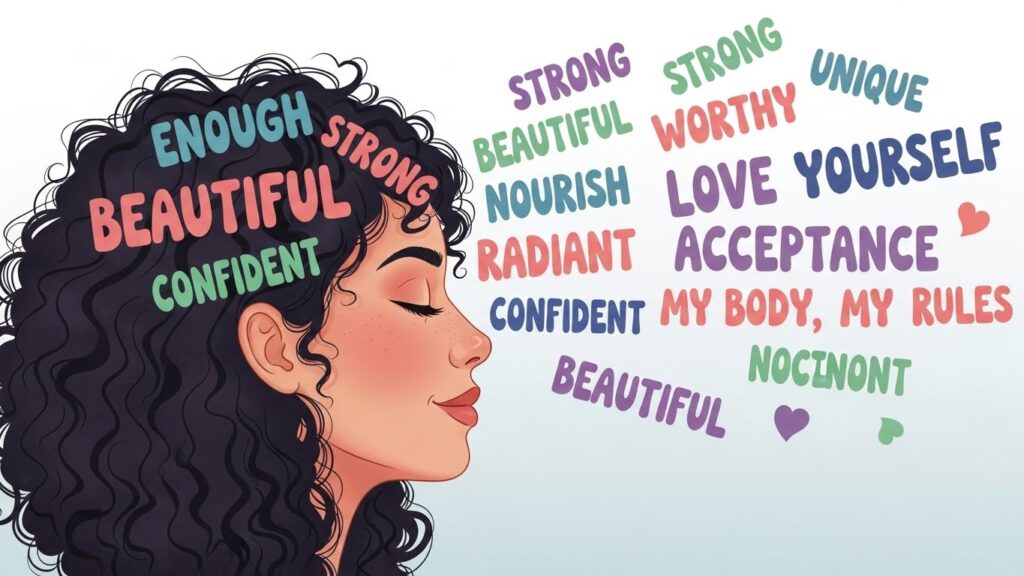
Recognizing the Link Between Heartbreak and Body Self Acceptance
Heartbreak doesn’t merely wound our emotions; it often casts a long shadow over how we perceive our physical selves. When a significant relationship concludes, it can profoundly shake our identity, leading us to question our worth in every sense. This profound emotional upheaval frequently manifests as a negative shift in our body self acceptance. We might find ourselves subconsciously attributing the rejection to our physical form, or projecting a diminished sense of self onto our appearance. It’s a common, yet often unspoken, experience.
Consider this: during the course of a relationship, especially one filled with love and desire, your body might have been a source of comfort, intimacy, or shared joy. After a breakup, that narrative can drastically change. The familiar reflection in the mirror might suddenly seem different, less whole, less attractive, or simply not enough. This isn’t just vanity; it’s a deeply human response to loss, striking at our innate need for validation and connection. When that external affirmation is gone, our inner critic can amplify, often targeting our physical appearance.
It’s critical to understand that this feeling of inadequacy isn’t about your body truly changing overnight. Instead, it’s your perception of it becoming distorted by emotional pain. This distortion subtly robs you of your inner control over how you feel about yourself. Your body, which should be a sanctuary and a source of strength, can start to feel like a painful reminder of what’s lost or a renewed source of insecurity. This is precisely why cultivating authentic body self acceptance becomes an essential, non-negotiable part of your healing process.
By recognizing this powerful, intricate link, you gain a vital new perspective. You realize that your struggle with body image isn’t a separate, superficial concern but an integral component of your heartbreak recovery. This awareness is the crucial first step toward reclaiming your sense of self and fostering profound personal growth. It allows you to approach your body with genuine compassion, understanding it has endured an emotional storm. This shift moves your focus from fixing perceived flaws to nurturing your whole self back to health, inside and out. Embracing this truth empowers you to transcend self-criticism and move toward profound body self acceptance, strengthening your connection to your authentic self.
Key Points
- Heartbreak often impacts our body self acceptance, leading to a diminished sense of self and physical perception.
- A negative shift in body image post-breakup is typically a distortion caused by emotional pain and loss, not actual physical changes.
- External validation from a relationship, once removed, can amplify the inner critic, targeting physical appearance.
- Recognizing the deep connection between emotional trauma and body image struggles is crucial for holistic healing and personal growth.
- Cultivating body self acceptance is an essential part of heartbreak recovery, moving from self-criticism to self-compassion.
Practical Insights
- Acknowledge that any feelings of reduced body self acceptance are a normal, valid response to emotional pain; this validation empowers you to take control of your healing narrative.
- Practice gentle self-compassion towards your body, understanding it has been through stress and needs nurturing, not judgment, to rebuild your intrinsic connection with yourself.
- Reframe your perspective: view efforts toward body self acceptance not as a superficial pursuit, but as a deep, integral component of your emotional recovery and personal growth.

Taking Charge of Your Narrative: Shifting Towards Body Self Acceptance
A breakup can leave you feeling exposed and vulnerable, and often, those insecurities zero in on your physical self. You might find yourself replaying old criticisms or comparing your body to an idealized version. This emotional space, though challenging, offers a powerful opportunity: to seize control of your own narrative around your body and redefine what acceptance truly means for *you*. It’s a chance to build a relationship with your body that is not contingent on external approval but rooted in profound self-respect.
For too long, many of us allow the whispers of past relationships, media images, or even fleeting societal trends to shape how we see our bodies. We inherit narratives about what’s “acceptable” or “desirable,” often without question. But during this healing period, you get to be the author. Shifting towards true body self acceptance isn’t about forced positivity or ignoring reality; it’s about a conscious decision to cultivate connection and kindness with the unique vessel that carries you through life. It means understanding that your inherent worth, your beauty, and your strength are not dictated by an ex-partner’s opinion or by fleeting metrics.
This internal shift begins with genuine curiosity and a gentle redirection of your self-talk. When a critical thought about your appearance arises, pause. Can you acknowledge it without judgment and then offer a softer, more compassionate counter-narrative? Instead of ‘My thighs are too big,’ try ‘My legs carry me, allow me to move, and give me strength.’ Focusing on what your body *does* for you—the ability to hug, to laugh, to create—can foster deep appreciation and internal validation. It moves you away from measuring worth by appearance and towards celebrating function and resilience.
Beyond mental reframing, practical steps reinforce this newfound narrative. Engage in physical activities that bring you joy and a sense of vitality, not merely as punishment or a means to an end. Whether it’s a brisk walk outdoors, dancing in your kitchen, or a soothing yoga practice, let movement be an act of caring for yourself. Nourish your body with foods that make you feel energetic and well, prioritizing your inner health over external demands. These are deliberate choices, acts of self-control that assert your autonomy and deepen your connection with your physical self. This journey is about reclaiming your power, fostering a sense of inner belonging, and showing up for yourself, fully and unapologetically, in the skin you’re in.
Key Points
- A breakup provides a significant chance to reclaim and redefine your body narrative, freeing it from external influences.
- Genuine body self acceptance involves fostering kindness and connection with your body, recognizing your inherent worth independent of others’ opinions.
- Actively challenging negative self-talk by reframing critical thoughts into compassionate statements helps cultivate a deeper appreciation for your body’s functions.
- Engage in physical activities and nourishment choices driven by joy and self-care, rather than by perceived flaws or societal pressures.
- This journey fosters inner strength and a profound sense of self-belonging, enabling you to live authentically in your own skin.
Practical Insights
- Start a Self-Talk Audit: For one week, consciously notice every negative thought you have about your body. Then, for each negative thought, gently rephrase it into a neutral or positive statement focusing on function or kindness. This reclaims control over your inner dialogue.
- Move for Joy: Choose one physical activity you genuinely enjoy, even if it’s just dancing to your favorite song for ten minutes. Make it about pleasure and connection with your body, not about burning calories or changing your shape.
- Create a ‘Body Gratitude’ List: Each day, write down three specific things your body did for you or three qualities you appreciate about it (e.g., ‘My hands allowed me to create art today,’ ‘I appreciate the strength in my legs’). This builds internal validation and a positive internal focus.
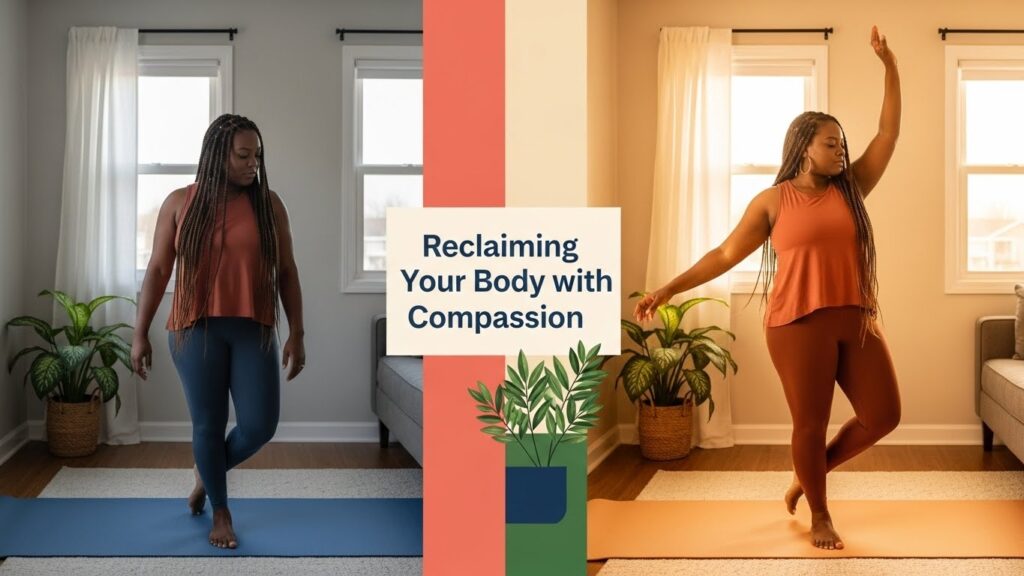
Gentle Movement and Nourishment for Body Self Acceptance
After a breakup, it’s common to feel a disconnect from your own body. Perhaps you’ve been neglecting its needs, or maybe you’re judging it harshly against an imagined ideal. This isn’t a time for drastic overhauls or punishing routines; instead, it’s an invitation to practice “body self acceptance” through kindness. Think of gentle movement and intentional nourishment as quiet conversations with your physical self, rebuilding a foundation of care. Reconnecting through movement doesn’t mean signing up for intense boot camps. It means finding ways to move that make you feel supported, strong, and centered. A slow walk in nature, a stretching session, or some mindful yoga can help you feel grounded. These activities aren’t about burning calories; they’re about recognizing your body’s capabilities and appreciating the simple act of moving. This steady engagement helps you regain a sense of control over your personal space and offers a quiet escape from the noise of post-breakup thoughts. It’s an act of deep connection, reminding you that your body is a reliable companion, not something to conquer. Nourishment, similarly, shifts from a focus on restriction to one of respect. Your body requires good fuel, especially during a stressful period. Opt for meals that bring you comfort and sustained energy, rather than quick fixes that leave you feeling depleted. Preparing a wholesome meal can be a meditative process, allowing you to focus on the present moment and care for yourself in a tangible way. This isn’t just about food; it’s about validating your need for sustenance and stability. Each thoughtful choice you make reinforces the message that you are worthy of care, fostering true body self acceptance. By consistently choosing these gentle acts – a calming walk, a nourishing meal – you are actively building a narrative of self-love. You are signaling to yourself that your well-being matters, and that you are capable of providing it. These habits slowly, steadily, nurture a feeling of belonging within your own skin, helping you to progress on your healing path.
Key Points
- Post-breakup, gentle movement helps re-establish a supportive connection with your body, focusing on appreciation rather than punitive exercise.
- Mindful nourishment, centered on comfort and sustained energy, is a vital act of self-respect and validation during a stressful period.
- These consistent acts of self-care foster a sense of control over your well-being and offer a quiet escape from negative thoughts.
- Engaging in gentle movement and thoughtful eating helps build resilience and a deeper sense of body self acceptance and belonging within your own skin.
Practical Insights
- Start with five minutes of gentle movement each day, like stretching or a short walk, simply observing how your body feels without judgment to build self-connection.
- Prioritize one nourishing, home-cooked meal daily, focusing on the act of preparation and eating as a way to provide your body with the care it deserves, reinforcing your sense of self-worth.
- When negative self-talk about your body arises, consciously reframe it by acknowledging your body’s resilience and capacity for healing, thereby regaining control over your inner dialogue.

Cultivating Inner Kindness: A Path to Body Self Acceptance
After a breakup, it’s common to find ourselves scrutinizing our bodies, often seeking reasons for what went wrong or feeling profoundly inadequate. This critical gaze can feel like a new form of heartbreak, turning our own minds against us. We might obsess over perceived flaws, comparing ourselves to others or to an idealized past self, trapped in a cycle of self-judgment. But what if the path to truly loving your body again started not with a new diet or workout regimen, but with a radical act of kindness towards yourself? Cultivating inner kindness is the essential, profound step towards genuine body self acceptance.
This journey is about consciously shifting from harsh judgment to gentle acknowledgment. It’s recognizing that your body has been your constant companion, carrying you through every triumph, every challenge, and every heartbreak. Instead of viewing it as something to be constantly fixed, perfected, or hidden, imagine treating it as your most loyal ally. This isn’t about ignoring aspects you wish to improve; it’s about approaching those desires from a place of genuine care and compassion, rather than contempt. When we consistently practice self-compassion, we begin to create an internal safe space, a sanctuary within ourselves where our physical being can simply be, without constant scrutiny. This conscious choice empowers you, giving you back control over your internal narrative and fostering a deep, unwavering connection with your truest self.
Think of it this way: would you speak to a beloved friend or someone you deeply cherish with the same harsh criticism you sometimes direct at your own reflection? Probably not. It’s time to extend that same understanding, patience, and warmth inward. A practical starting point is to simply notice your critical thoughts without judgment. Observe them as passing clouds, then gently, deliberately replace them with affirmations of care. Tell yourself, “My body is strong,” or “I am grateful for what my body allows me to do.” This isn’t just about ‘fluffy’ positivity; it’s a profound act of self-nurturing that allows you to grow beyond past insecurities and external expectations. Your body deserves kindness, not because it fits an arbitrary ideal, but because it is uniquely yours, and it has faithfully carried you through every moment of your life. Embracing this gentle, consistent approach helps you validate your own intrinsic worth, building a solid foundation of self-regard that no external event or fleeting opinion can shake. This process ultimately frees you from the exhausting pursuit of external validation, offering an escape into authentic peace and a true sense of belonging in your own skin.
Key Points
- Breakups often intensify self-scrutiny and body image concerns, trapping individuals in cycles of self-judgment.
- Cultivating inner kindness involves a conscious shift from harsh self-criticism to gentle acknowledgment, treating your body as a loyal companion.
- Practicing self-compassion creates an internal safe space, giving you control over your internal narrative and strengthening your connection with your authentic self.
- Replacing critical thoughts with affirmations of care is a powerful act of self-nurturing that supports personal growth beyond insecurities.
- True body self-acceptance, rooted in inner kindness, provides freedom from external validation and leads to authentic peace and belonging within oneself.
Practical Insights
- Consciously observe critical thoughts about your body without judgment, then actively reframe them with compassionate, caring statements to gain control over your inner dialogue.
- Treat your body as a trusted ally by listening to its needs for rest, nourishment, and joyful movement, responding with kindness rather than punitive measures.
- Recognize that self-acceptance is an ongoing process; celebrate every small act of self-kindness and extend patience to yourself as you grow a stronger, more connected relationship with your body.

Finding Your Tribe: Community and Body Self Acceptance
After a breakup, it’s all too common to feel a heightened sense of self-consciousness, especially concerning your body. The comfort of a shared life is gone, and you might find yourself scrutinizing every curve and line, wondering if you measure up. In these moments of vulnerability, isolation can feel tempting, but true healing and a return to body self acceptance rarely happen in solitude. Instead, finding your tribe – a community that sees and celebrates you – becomes a profound act of self-care. This isn’t about fitting in; it’s about finding where you genuinely belong. Your tribe will be the people who appreciate your spirit, your humor, your passions, long before they notice any perceived physical flaws. When you’re surrounded by individuals who offer genuine connection and respect, their acceptance can act as a powerful mirror, reflecting back to you the inherent worth and beauty you might have forgotten. This validation from a supportive circle helps dismantle the critical voices in your head, allowing you to grow into a deeper understanding and acceptance of your physical self. Think about spaces where authenticity thrives: a book club discussing profound ideas, a hiking group exploring local trails, a volunteer organization working towards a cause you champion. These environments naturally shift your focus from self-critique to shared experience, from perceived imperfections to powerful contributions. Engaging in activities that truly excite you helps you connect with others on a deeper level, building friendships rooted in shared values rather than superficial judgments. This shift provides a powerful sense of control over your narrative, allowing you to curate a social life that actively nurtures your well-being and fosters greater body self acceptance. When your community cherishes you for your essence, the external noise about physical ideals fades. You realize that your body isn’t just an aesthetic object; it’s the vehicle for your adventures, your laughter, and your contributions. Cultivating these meaningful relationships means less time worrying about external appearances and more time living fully, loving who you are, and allowing your body to be simply that: yours, and perfectly enough.
Key Points
- Breakups often increase body self-consciousness and isolation, making community crucial for healing and body self acceptance.
- Finding a supportive ‘tribe’ offers genuine connection and validation, shifting focus from perceived flaws to inherent worth.
- Engaging in shared hobbies or causes helps build relationships based on authenticity, fostering body self acceptance.
- An accepting community acts as a mirror, reflecting your intrinsic value and helping silence inner critics regarding your body.
- Cultivating meaningful relationships moves focus from external physical ideals to living fully and accepting your body as your own.
Practical Insights
- Seek out communities centered around your genuine interests or causes to build authentic connections where you feel accepted for who you truly are.
- Actively participate and be vulnerable within your chosen groups; allowing others to see and appreciate your true self is key to internalizing their validation and improving body self acceptance.
- Prioritize relationships that make you feel valued and seen, rather than those that encourage comparison or superficial judgments, consciously shaping your social environment for well-being.
Celebrating Every Step on Your Journey to Body Self Acceptance
After a breakup, rediscovering a gentle relationship with your body can feel like navigating unfamiliar terrain. It’s easy to get caught in a cycle of self-criticism, waiting for a grand moment of enlightenment or a specific physical change to finally ‘accept’ yourself. But real body self acceptance isn’t a destination; it’s a continuous, evolving process built on countless small, deliberate acts of kindness towards yourself. The true power lies in acknowledging and celebrating every single step, no matter how small, along this path. You deserve to feel seen and validated for every ounce of effort you put into nurturing yourself. Think of it this way: each time you choose a comfortable outfit over something that feels constricting, that’s a win. Each moment you look in the mirror and offer a quiet nod of approval rather than harsh judgment, that’s progress. When you move your body in a way that feels good, purely for joy or strength, not punishment or external validation, you are actively cultivating a deeper connection with your physical self. These aren’t minor achievements; they are profound shifts in how you relate to the most intimate part of your existence. This practice helps you regain control over your thoughts, allowing you to steer away from comparison and towards genuine appreciation. By consciously noting these positive actions, you begin to take back control of your internal narrative, replacing old, critical voices with a steady, compassionate presence. This mindful awareness helps you build a more supportive inner environment, allowing you to feel more grounded and secure in your own skin. It’s about giving yourself permission to be exactly where you are, appreciating the body that carries you through life, and understanding that its worth is intrinsic, independent of external circumstances or opinions. As you celebrate these tiny triumphs, you reinforce a sense of belonging with your truest self, reducing the reliance on external approval that often fades after a relationship ends. Embrace these small victories, for they are the foundation of lasting peace and genuine self-regard, paving the way for profound personal growth.
Key Points
- Body self acceptance is an ongoing process, not a singular, fixed destination.
- Celebrating small acts of self-kindness, like choosing comfortable clothing or offering self-approval, is crucial for fostering a positive self-relationship.
- These seemingly minor actions represent significant shifts in how you relate to your body, deepening your personal connection.
- Acknowledging progress validates your efforts, gives you control over your internal dialogue, and builds inner security.
- True self-worth is intrinsic, independent of external validation, and is cultivated through self-compassion.
Practical Insights
- Keep a small ‘victory log’ to note down instances of self-kindness or acceptance towards your body each day, reinforcing your efforts and progress.
- Practice mindful movement by engaging in physical activities that bring you joy and comfort, rather than focusing solely on aesthetic outcomes, to deepen your body connection.
- Actively challenge self-critical thoughts by consciously replacing them with a compassionate counter-thought, giving you greater control over your internal narrative and fostering inner peace.
Conclusion
Reclaiming your sense of self and fostering body self acceptance after a breakup is a powerful act of self-love. By acknowledging your feelings, shifting your perspective, nurturing your physical self, and leaning into support, you actively choose kindness. This path allows you to heal, grow, and build a stronger, more compassionate connection with your body, celebrating the unique strength and beauty you possess.