Volunteering After a Breakup: The Connection-Through-Contribution Framework
Introduction
After a breakup, two specific things go missing at once: a sense of purpose that the relationship used to supply, and easy, low-stakes contact with other people. Most advice tells you to "get out there," which is true and useless — it names the goal without giving you a doorway.Volunteering is one of the most reliable doorways, because it rebuilds both missing things through the same activity, and it does it without the performance pressure of trying to socialize directly.
Quick Answer: Volunteering works in recovery through what I call Connection Through Contribution — you get social contact and renewed purpose as a byproduct of doing something useful, rather than as the thing you're anxiously trying to achieve. It helps because:
1. Contribution restores purpose — a role and a reason that are yours, not the relationship's
2. Shared tasks create low-pressure connection — bonds form sideways, through doing, not through performing
3. Structure beats willpower — a scheduled commitment gets you out when motivation is low
The trick is choosing the right kind and starting small enough that it helps instead of becoming one more thing you're failing to keep up with.

Why Volunteering Helps Recovery: Connection Through Contribution
A relationship quietly supplies a sense of purpose — someone to show up for, a shared project, a reason your day matters to another person. When it ends, that supply cuts off, and the resulting flatness is often misread as depression when it's partly a purpose vacuum. Contribution fills it directly: when you're useful to something, you have a reason that belongs to you.
The social benefit comes through a side door. Trying to make friends directly is high-pressure; you're performing, evaluating, and aware of every awkward pause. Working alongside someone toward a shared task removes the performance — connection forms as a byproduct of the doing. This is the same low-demand, repeated-exposure mechanism behind structured social rebuilding, covered in Making Friends After a Breakup.
There's also a perspective effect. A breakup collapses your attention onto your own loss; contributing to someone else's need widens the frame again. That widening is genuine relief, not a distraction technique — it temporarily reconnects you to a world that's bigger than the breakup.
Key Insights: - A breakup creates a purpose vacuum that contribution fills directly - Connection forms as a byproduct of shared tasks, without performance pressure - The mechanism is the same low-demand, repeated exposure that rebuilds social bonds - Contributing widens attention beyond the loss — genuine relief, not distraction
Put It Into Practice: - Name the flatness as a purpose vacuum, then give yourself a role to fill it - Choose contact through shared tasks rather than direct socializing - Notice the perspective shift when your attention widens beyond the breakup
Key Points
- A breakup leaves a purpose vacuum that contribution fills
- Shared tasks create connection without the pressure of performing
- It uses the same low-demand repeated-exposure mechanism as social rebuilding
- Contributing widens attention beyond the loss
Practical Insights
- Reframe post-breakup flatness as a purpose vacuum
- Seek contact through tasks, not direct socializing
- Let the perspective shift register as real relief

Choosing the Right Kind of Volunteering
Not all volunteering helps equally in early recovery. Match the kind to where you are.
Favor task-based over emotionally heavy. In the raw months, hands-on, concrete work — sorting, building, serving, planting — is steadier than roles that ask you to hold other people's crises (crisis lines, hospice, trauma support). Those roles are valuable, but they draw on emotional reserves you're currently rebuilding. Choose work that gives without draining.
Favor recurring over one-off. A standing weekly slot delivers the repeated, low-pressure exposure that lets familiarity and connection accumulate. A single event is a fine start, but the recovery benefit compounds with regularity — the same faces, the same rhythm, a place where you're expected.
Favor in-person over remote, when you can. Remote volunteering is real contribution, but the social and perspective benefits are strongest with physical presence around other people. If energy is very low, start remote and move toward in-person as capacity returns. And let the cause be one you actually care about a little — genuine interest is what makes it sustainable rather than another obligation. If part of what you're seeking is a renewed direction, pair this with Find Your New Purpose After a Breakup.
Key Insights: - Task-based work gives without draining the emotional reserves you're rebuilding - Recurring slots compound the connection benefit through repeated exposure - In-person delivers stronger social and perspective benefits than remote - Genuine interest in the cause is what makes it sustainable
Put It Into Practice: - Choose concrete, hands-on work over emotionally heavy roles for now - Pick a recurring slot over a one-off event - Start with a cause you genuinely care about, even a little
Key Points
- Task-based volunteering gives without draining recovery reserves
- Recurring commitments compound connection via repeated exposure
- In-person beats remote for social and perspective benefits
- Genuine interest in the cause keeps it sustainable
Practical Insights
- Pick concrete work over emotionally heavy roles early on
- Choose a recurring slot, not a one-off
- Start with a cause you actually care about
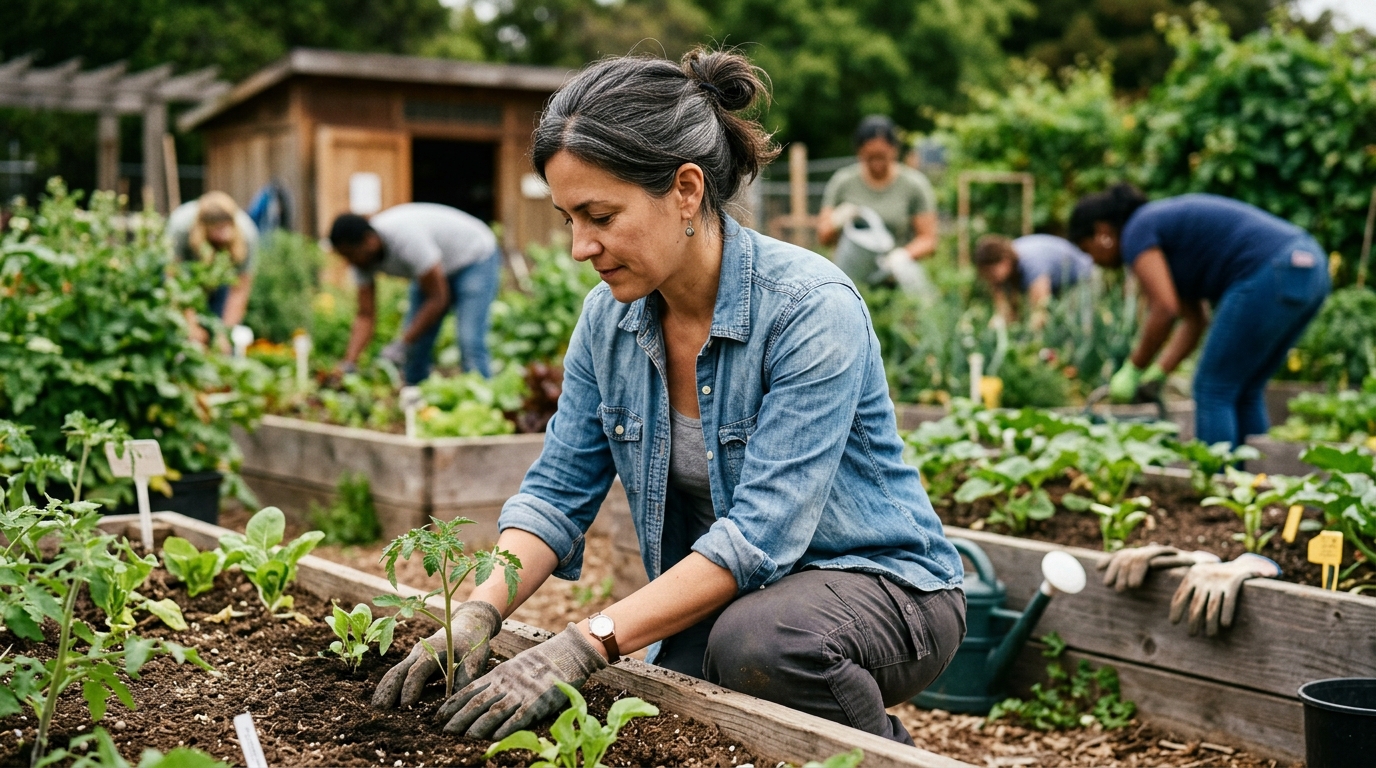
Starting Small Without It Becoming an Obligation
The fastest way to turn a healing activity into a burden is to over-commit while your capacity is low. Start smaller than feels impressive.
Begin with one short, low-stakes commitment — a single two-hour slot, once. Not a weekly pledge, not a board seat. A small first dose lets you find out how it actually feels without trapping you in a commitment you may not have the energy to honor, which would just add a fresh layer of self-criticism.
Protect it from becoming a should. If you find yourself dreading it the way you dread chores, scale back rather than push through — the point is contribution that restores you, not another performance you're failing. It's allowed to be small and occasional.
Let it grow on its own terms. If a slot feels good, add another. Regularity should follow genuine pull, not a plan you imposed on day one. Track how you feel after each session in Untangle Your Thoughts — if the after-feeling is steadier and a little lighter, that's the signal to keep going; if it's consistently draining, change the kind or the dose.
Key Insights: - Over-committing while capacity is low turns healing into burden - A single short first dose reveals how it feels without trapping you - If it becomes a dreaded should, scale back rather than push through - Let regularity grow from genuine pull, not an imposed plan
Put It Into Practice: - Commit to one short slot first, not a recurring pledge - Scale back if it starts to feel like a chore you're failing - Track the after-feeling and let it guide whether you add more
Key Points
- Over-committing at low capacity turns healing into a burden
- A single short dose reveals the fit without a trap
- Scale back if it becomes a dreaded obligation
- Let frequency grow from genuine pull, not an imposed plan
Practical Insights
- Start with one short slot, not a pledge
- Scale back rather than push through dread
- Use the after-feeling to decide whether to add more
Frequently Asked Questions
Does volunteering really help after a breakup?
Yes, because it rebuilds two things a breakup removes at once: purpose and low-pressure connection. You get social contact and a renewed sense of being useful as a byproduct of doing something for others, rather than as something you're anxiously trying to achieve. It also widens your attention beyond the loss, which is genuine relief rather than mere distraction.
What kind of volunteering is best when you're going through a breakup?
Favor concrete, task-based work (sorting, serving, building, planting) over emotionally heavy roles like crisis lines while your reserves are low, choose a recurring slot over a one-off so connection can accumulate, and pick in-person over remote when you can for the stronger social and perspective benefits. Above all, choose a cause you genuinely care about so it stays sustainable.
How do I start volunteering without overwhelming myself?
Start smaller than feels impressive — one short, low-stakes shift, once, rather than a weekly pledge or a board seat. A small first dose lets you learn how it feels without trapping you in a commitment you may not have energy for. Let it grow only if it genuinely pulls you back; if it starts to feel like a dreaded chore, scale back rather than push through.
Can volunteering help me make new friends after a breakup?
Often, yes — but indirectly, which is the point. Working alongside people toward a shared task removes the performance pressure of trying to make friends directly, so bonds form sideways through the doing. Recurring, in-person volunteering provides the repeated low-demand exposure that lets familiarity turn into real connection over time.
What if volunteering starts to feel like another obligation?
Scale it back immediately rather than pushing through. The benefit comes from contribution that restores you, not from another performance you're failing to keep up with. Track how you feel after each session — steadier and a little lighter is the signal to continue; consistently draining is the signal to change the kind of work or reduce the dose.
Conclusion
Volunteering helps after a breakup because it rebuilds purpose and connection at the same time, through the side door of contribution — you get both as a byproduct of doing something useful rather than as things you're anxiously chasing. Choose task-based, recurring, in-person work in a cause you care about, start smaller than feels impressive, and let it grow only on its own terms so it restores you instead of becoming another obligation.If you're also working on the wider job of rebuilding your social circle, pair this with Making Friends After a Breakup and, if the deeper need is direction, Find Your New Purpose After a Breakup. Track the after-feeling in Untangle Your Thoughts.